analysis of the latest and most scholarship. Contact email: Boo
Bullets & Bandages: The Aid Stations And Field Hospitals At Gettysburg. By James Gindlesperger Appendices, Notes, and Index, 360pp., 2020. Blair/ Carolina Wren Press. www
There have been many books written about the battle of Gettysburg since July 3, 1863, and new titles are published ev year. These works cover nearly aspects of the fighting during three July days with many dealing with a specific part of the tle, others looking at the comm
solders, regiments, tactics, sp ic individuals, and even the ca
paign. Very few volumes have dealt with field hospitals and
book that provides students of the battle of Gettysburg’s with
understanding of the medical as sistance provided many soldiers during the hostilities and the termath. Enthusiasts will learn about the many citizens who opened their homes and farms to
River Neil Index ur readers with timely Publishers cant Civil War research and com,
care for the many brave men from the Union and the Confederacy who fought in this historic battl Over 160,000 men fought in this engagement. During the battle there was a total of 51,112 casualties including 7,052 dead and 33,264 wounded Union and Confederate soldiers, approximately one in three soldiers ended up a casualty. When the two armies departed a few days later, thousands of wounded remained. Many hospitals and aid stations were set up throughout the
battlefield for corps, divisions, and regiments. Following the fighting when both the Army of the Potomac and the Army of Northern Virginia returned to Virginia, many men had to be treated around the Gettysburg area. Gindlesperger’s guide and fiel study has a distinct view of this battlefield town and presents ideas and information that will benefit many enthusiasts, trampers, and armchair students. This monograph is broken into sixteen chapters that tell the story the battlefield’s field hospitals
The text begins by detailing the treatment of the wounded, includ-
ing the efficiency of Letterman Plan, and the difficulties asso-
Farm, the Jacob Weikert Farm, the George Spangler Farm, the
Jacob Brinkerhoff Farm, and the St. Francis Xavier Church. What
H Gettysburg Hospitals . . . . . . . . . . . see page 42
Confederate Innovation and Impr Naval Forces on the Mississippi
the Arteries of Confederate Naval in the Mississippi
y, 1861–1865. By telain. Illustrated, iography. Savas Beatie
Numerous accounts have been published of the Union’s naval operations that helped capture Forts Henry and Donelson, Vicksburg, and New Orleans; this meticulously researched vo
ume comprehensively covers the Confederacy’s attempt to retain control of the Mississippi Rive Valley. At the outset of the Civil W the South was faced with cobbling together a navy from few resources, impromptu construction, innovative strategies, an an ad hoc naval force. A fully functional river force capable of retaining control of the Mississippi River and its tribu taries was one of Navy Secretar Stephen Mallory’s top prioritie His desire was to utilize a fle ironclad warships and converted
wooden vessels to keep internal Confederate supply lines open.
The Confederacy started the war with no government ship-
barriers, and torpedoes to slow down the Union flotillas and pr
long control of the Mississippi valley. The Confederate River Defense Force and the independent Louisiana Navy, while improvised and makeshift, proved formidable, albeit temporary,
barriers to Admiral Farragut’s fleet and Porter’s river flotilla. From the first Confederate na-
val victory at Head of Passes to isolated hard won skirmishes on the Mississippi and Yazoo Rivers, the Confederate naval force tried a three-pronged strategy of circumventing the blockade to keep supply lines open, attacking Northern commerce, and keeping the port of New Orleans north to Kentucky free of Union control. They ultimately were most suc-
cessful in only the first of these goals, interfering with Northern commerce. Yet, their small, improvised navy managed to delay the Union fleet from cooperating with the army in capturing ports
from Memphis to New Orleans. From the early days of the war, the South learned the value of armored vessels, the need to fortify land positions by shifting limited resources, running ships past Union strongholds, and using unconventional weapons to blunt Union naval superiority. While ultimately failing in their attempt to retain control of the Mississippi, it was not for the lack of trying and the courage of the defenders.
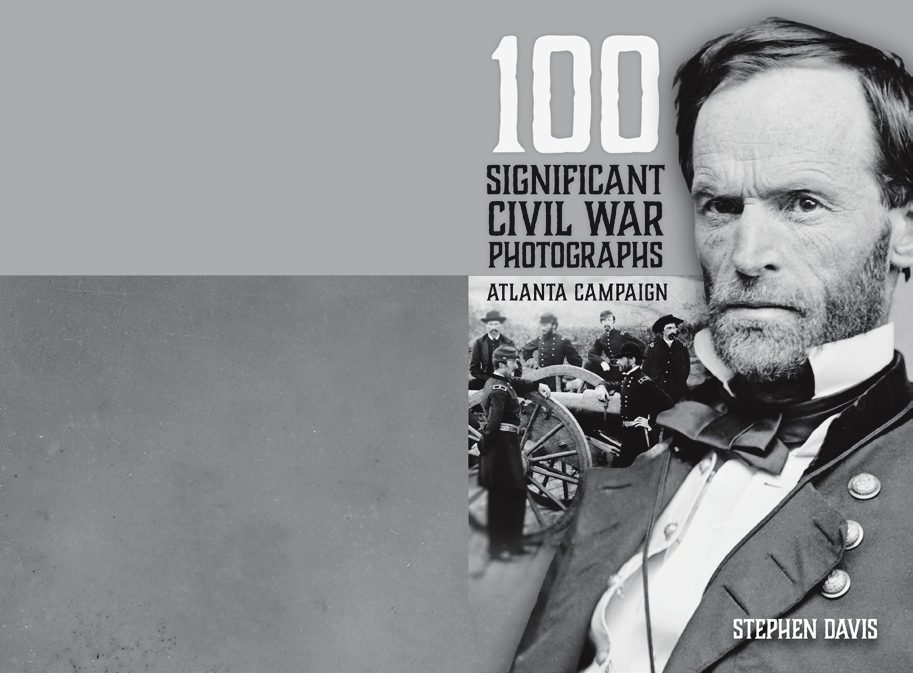
The Atlanta Campaign The American Civil War was the first war in w used entrenchments, repeating rifles, ironcla communications. It was also the first American War to be exte Mathew Brady, Alexander Gardner and Timothy O having made iconic photographs in the Civil W George N. Barnard deserves to be ranked in th work in the war’s western theater. A civilian photographer hired by Gen. William take pictures of fortifications around Atlant them in and around the city in the fall of 18 100 Significant Civil War Photographs: Union Maj. Gen. James B. McPherson’s death in 1864. Thus far, no comprehensive, definitive listin Atlanta Campaign presents a riveting work. The Library of Congress has 130 images; the U Point, New York, has at least 98 photographs, collection of George Barnard’s camera Other repositories, such as the Gilder Lehrma New York City, have smaller collections. For this book we have chosen a hundred images work. Most of the photographs are from other students may wonder at some of our sele
We hope that this work will stimulate further Barnardiana, and that other scholarly volumes Barnard’s time in Atlanta, mid-September
Federal occupation of the city. 128 pages, photographs,
advances the scholarly literature of ISBN: 978-1-61850-151-6.
The failure could more appropri ately be attributed to the lack army and navy command coor-
dination, too much confidence i the strength of the River Defen Force, and a lack of resources and manpower to compete with Union industrial capacity. Neil Chatelain does a magnif icent job of weaving extensive research into a readable and en grossing, almost day by day, an
ysis of the Confederate navy’s actions on the Mississippi. Thi
book is thoroughly researched, eminently readable, engrossing, and essential to any understand
ing of the Confederate navy’s r in the western theatre. Every h torian of the Trans-Mississippi should add this volume to their library.
Dr. Wayne Wolf is Professor Emeritus at South Suburban College and the author of numerous Civil War books and articles including Two Years Before the Paddlewheel, The Las Confederate Scout, and Soldiers Sailors and Scoundrels of the C War.
hief engineer to several hundred of mous is the site of
In November 1863, Union forces under the command of Major General Ulysses S. Grant routed the Confederate Army of Tennessee under Braxton Bragg outside Chattanooga. The defeat at Chattanooga was the la great Confederate catastrophe of 1863, following Gettysburg and Vicksburg. Arguab Chattanooga was the most damaging because it opened Georgi and its machine shops and farm up to Union invasion. The Impulse to Victory by Da A. Powell is the story of that feat and the campaign’s effect
on Ulysses S. Grant. Powell, a business executive by profession, is a prolific and well-regarded Civil War author by avocation. He is perhaps best known for his Chickamauga Campaign trilogy, as well as Battle Above the Clouds: Lifting the Siege of Chattanooga and the Battle of Lookout Mountain, October 16-November 24, 1863. Impulse to Victory is a natural fit with the author’s other work that covers Western Theater campaigns. What distinguishes this book from the others is that Powell fo cuses not only on the battle but also on Grant’s performance and generalship at this critical poin in both the war and his career. Powell examines the prelude to the battle, provides an in-depth analysis of the details of the ca paign, covers all the major issue and personalities, and explores the aftermath of the encounter in twelve tight and well-written chapters. Troop movements, logistical considerations, etc., are all granted proper attention. Anyone unfamiliar with the battle would find Impulse to Victory interesting, informative, and enjoyable. The question could be asked whether or not another book on the battle is needed, considering that Powell covers material that other historians have already pre sented and reaches conclusions that are not unique from previous works. A strong case in favor of the book can be argued on at least three grounds. First, Powell does an excellent job of presenting Grant realistically as
a fair commander who owes his success at Chattanooga (and perhaps his entire military career) to tenacity and luck. Grant does not perform exceptionally well at Chattanooga, and yet he gains credit for a battle actually won by the Army of the Cumberland’s soldiers in an impetuous charge and Confederate incompetence. The Grant who emerges from the pages of Powell’s book is far mor nuanced than the one found in the ever-increasing hagiographical works on the general. Second, Powell’s account is concise and well-written and stands out as perhaps the best short volume on the battle. It is perfect for the student or the af cionado. Third, and unfortunately perhaps the most important reason why this book is crucial now, is that professional Civil War hi torians have generally stopped writing military history. Indeed, scholars are becoming prejudiced against military studies. Many younger students of the war today know nearly nothing about the actual military events of the conflict. Considering the war was won and lost on the battlefield, this is devastating and detrimental to the field. In sum, this is a solid work t both lay readers and professional historians will find it useful.
John D. Fowler Ph.D., is a profes sor at Dalton State College, and military historian specializing i the Civil War Era. He has written several books and articles primar ly focused on the Western Theater of the conflict.
Useful Captives: The Role of POWs in American Military Conflicts. Edited by Daniel Krebs and Lorian Foote. Illustrated, notes, index, 344 pp., University Press of Kansas, kansaspress.
Useful Captives is a compilation of 11 essays on POWs emanating from the 2017 Filson Historical Society’s lecture series. The essays encompass the experiences of POWs from the Georgia Creek Border incursions to detainees from Iraq and Afghanistan. Four chapters deal specifically with the American Civil War. The role of POWs is discussed around five main themes: the hostage as a negotiating tool, a pro paganda asset, an object of indoctrination, the proof of milita success, and use as a political e pedient. Each chapter interprets the story of POWs into a broader narrative about society and the cultural and social context o warfare. Studying POWs illuminates the values inherent in both the captors and captives, whether those be the definition of manliness and courage, the role of defiance in defining POW character, or how POWs can become the targets of hatred and revenge. To fully understand the POW experience, the authors argue that seven phases of that experience need to be understood, i.e. pre-capture, capture, removal, Publishers/Authors Send your book(s) for review 520 Folly Road, Suite 25 PMB Charleston, SC 29412
landscape, resistance, release, and lament. Without a thorough analysis of each of these stages, the POW experience can only partially be understood. The four chapters dealing with POWS in the American Civil War include individual soldier vignettes as well as common conceptions and misconceptions regarding POWs, their ordeals, motivations, and use as political ploys, particularly in the North. Additionally, environmental issues of Camp Douglas, Elmira Prison, and Andersonville, created problems for captives and the communities in which they were located. Likewise, Northern newspapers and politicians are called out for their biased coverage of the horrors of Southern prisons while neglecting the abuses in the Northern camps, political ploys that lasted decades after the war’s end. Post Reconstruction writing by former Confederates tried to counter this Northern bias by creating th literature of the Lost Cause for which they fought. One fourth of all Civil War soldiers were captured during the war and 56,000 died in prison. The editors of this text coul easily have compiled a comprehensive book on these POWs and provide a more coherent analysis of POWS, both North and South. Their present attempt should be divided into a series dealing with the POW experience in each American and foreign theatre of war. They attempt too much in a single volume that lacks the dept necessary for a complete analysis of the individual wars. Thus, this book serves best as an introduction to the trials of POWS over a 250 year span and begs the need for further research on each conflict.
Dr. Wayne L. Wolf is Professor Emeritus at South Suburban College and the author of numerous Civil War texts and articles including Two Years Before the Paddlewheel and the Last Civil War Scout. He is past president of the Lincoln-Davis Civil War Roundtable.
Another Hit by Powell and Wittenburg H Gettysburg Hospitals Co . . . . . . . . . . from page Tullahoma: The Forgotten Campaign that Changed the Course of the Civil War, June 23-July 4, 1863. By David A. Powell and Eric J. Wittenberg. Appendix, Notes, Bibliography, and Index, 395 pp., 2020. Savas
and the public of both nations focused on events in Mississippi and Pennsylvania, Union General
William S. Rosecrans and his Army of the Cumberland executed an impressive campaign of maneuver, and in a matter of
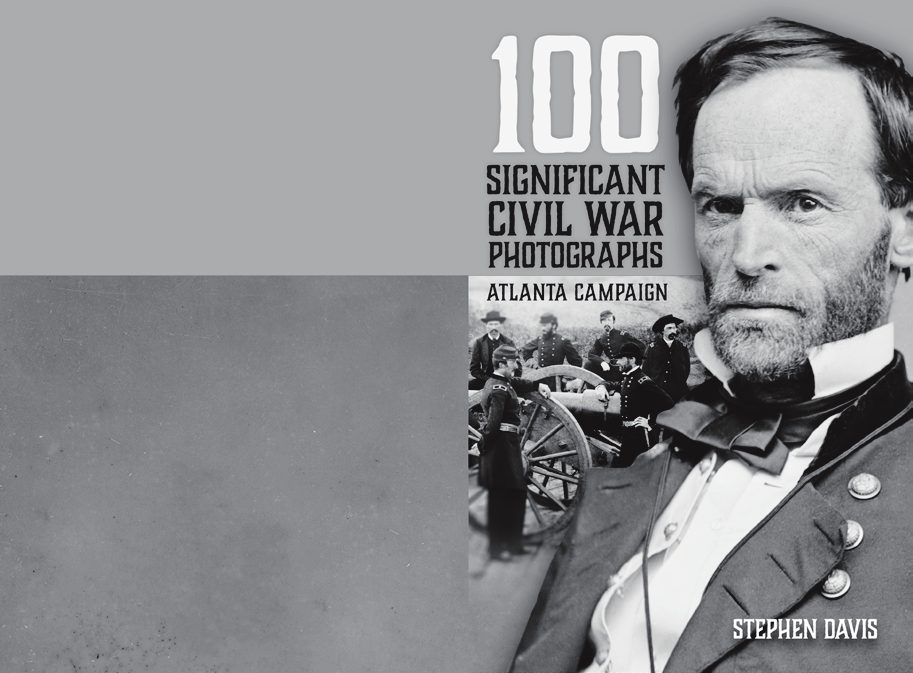
The Atlanta Campaign The American Civil War was the first war in w used entrenchments, repeating rifles, ironcla communications. It was also the first American War to be exte Mathew Brady, Alexander Gardner and Timothy O having made iconic photographs in the Civil W George N. Barnard deserves to be ranked in th work in the war’s western theater. A civilian photographer hired by Gen. William take pictures of fortifications around Atlant them in and around the city in the fall of 18 100 Significant Civil War Photographs: Union Maj. Gen. James B. McPherson’s death in 1864. Thus far, no comprehensive, definitive listin Atlanta Campaign presents a riveting work. The Library of Congress has 130 images; the U Point, New York, has at least 98 photographs, collection of George Barnard’s camera Other repositories, such as the Gilder Lehrma New York City, have smaller collections. For this book we have chosen a hundred images work. Most of the photographs are from other students may wonder at some of our sele
We hope that this work will stimulate further Barnardiana, and that other scholarly volumes Barnard’s time in Atlanta, mid-September
Federal occupation of the city. 128 pages, photographs,
advances the scholarly literature of ISBN: 978-1-61850-151-6
weeks with little bloodshed, drov Confederate General Braxton Bragg’s Army of Tennessee from middle Tennessee and finally secured the state for the Union. On par with Vicksburg and Gettysburg in terms of strate gic consequences, the Tullahoma Campaign dramatically altered the situation in the Western Theater and led to the series of battles to secure Chattanooga and the gateway to Georgia. It is understandable that contemporaries “lost” the Tullahoma campaign among the great battles of 1863. While Rosecrans took pride in driving the Rebels from Tennessee at the cost of few er than 500 casualties, President Lincoln and Secretary of War Stanton viewed the battle as a lo opportunity. Indeed, they chided the general that Bragg’s army had escaped destruction. Given the operational skill exhibited by th Union commander and the significance of the campaign to the movement against Chattanooga, it is both unfortunate and surpri ing that scholars have failed to examine it in greater depth. Thankfully, historians David A. Powell and Eric J. Wittenberg have turned their attention and r search to this forgotten campaign Powell, a prolific author and not ed authority on the Chickamauga Campaign, and Wittenberg, an equally prolific writer and a cav alry specialist, have produced an excellent study. In fourteen con-
cise and well-written chapters, the authors cover the important
events and personalities associat ed with the campaign from its beginnings to its aftermath. While
little of their research or concl sions is new, this is still an im
portant work for several reasons. First, the campaign is often mentioned only briefly in other works that cover the Western
ief engineer to several hundred of ous is the site of
Theater or events in Tennessee. Powell and Wittenberg have given readers and scholars the indepth monographic study that Tullahoma deserves. The authors do justice to this complex campaign of intricate troop movements, long marches, feints, log tical concerns, bad weather, and skirmishes. What emerges is the brilliance of Rosecrans and the ineptitude of the Confederates. Bragg’s constant state of confusion as to Rosecrans’s objective exacerbated by the poor performance of his corps commanders, led to disaster for the Rebels a they ceded the southern portion of middle Tennessee without a fight. The second reason this work is welcomed is that it clearly demonstrates the need for greate study of the military campaigns and battles of the Civil War. Fa from being an exhausted field, Civil War military studies still has much to be explored. In sum, this volume is an example of how a modern campaign study should be written. It is well-researched, well-writ ten, and well-presented with excellent maps and illustrations. contains balanced and nuanced evaluations of the leadership of Rosecrans and Bragg and presents realistic descriptions of t performance. Finally, it covers the often overlooked but critica role supply and logistics played in this campaign and, indeed, in
all military campaigns. This boo deserves a wide audience.
sor at Dalton State College, and military historian specializing
the Civil War. He has written se eral books and articles primaril focused on the Western Theater o the conflict.
is interesting that the author i cluded many smaller and less well known places of historic in terest. People will be intereste to learn that larger sites like U.S. Sanitary Commission Lodge and Camp Letterman, not only provided services and aid to sol diers but prepared the wounded for transport to urban hospitals in places such as Philadelphia and Baltimore. Finally, the remaining chapters deal with the Hanover, Hunterstown, Fairfield, and Cashtown areas. An excellent overview of the hospitals, aid s tions, farms, homes, and churches that took care of both Union and Confederate soldiers is covered throughout this treatment. James Gindlesperger and his wife Suzanne continue the research of Greg Coco’s wellknown books and expand on the subject matter providing visitor with an excellent guide that includes the GPS coordinates of countless sites discussed in the text. People visiting Gettysburg will be able to add these import ant locations to their itinerary This study is well written, soun ly researched, abundantly illustrated, and enhanced with detail maps. It is indispensable readin for anyone interested in the Bat of Gettysburg’s aftermath. Two valuable appendices, a glossary of Civil War era medical terms and money values of damaged
properties, notes, and an index enhance this manuscript. This excellent volume contains many illustrations as wel a helpful map of all sites at t beginning of each chapter that provides helpful information an context about where many hospitals and aid stations were lo cated. This monograph will help visitors to the greater Gettysb area receive a better understan ing of what doctors did in trea soldiers and what the townspeople went through in opening the homes and farms during and following the fighting. Highly rec ommended by this reviewer.
David Marshall is a high school American history teacher in the Miami-Dade School district for the past thirty-four years. A l long Civil War enthusiast, Davi is president of the Miami Civil War Round Table Book Club. In addition to numerous reviews in tions, he has given presentatio to Civil War Round Tables on Joshua Chamberlain, Ulysses S. Grant, Abraham Lincoln, the Bat of Gettysburg, and the Common Soldier.
Weekend Warrior: Over Fifty Years Re-living American History. By Lawrence J. Bopp, illustrated, appendices, subjec index. Privately published 2020 Lawrence J. Bopp, paperback,
The hobby of U.S. Civil War reenacting has been around long enough now to have created a history of its own. Civil War r enactments began springing up around the time of the U.S. Civ War Centennial and have continued ever since. Weekend Warrior is the title of the memoirs of time reenactor Lawrence J. Bopp He sets out here to prove the o saw that “we are all the heroes of our own story.” Mr. Bopp fir began participating in American Civil War events during 1967 as a recruit in George Gorman’s 2nd NC Infantry, arguably the sine qua non of authentic Civil
War units during that time. By all accounts George Gorman was an interesting character with a
well-earned reputation for wild behavior. As often happens with reenactment groups, things ran
A Lifetime of Reenacting their course and the 2nd NC soon folded, but Mr. Bopp had found something there that he really enjoyed and pursuing historical military reenacting would come to dominate his weekends for the next half century. Mr. Bopp formed his own unit in 1968 in Baltimore, Md., that he called the 4th NC Infantry and maintained some of the same characteristics found in Gorman’ 2nd NC Infantry, most particularly the attention paid to thei equipment and handmade woolen uniforms. His quixotic search for the right fabrics and patter dominated his earliest recollections. Let me hasten to add, this was taking place during the time before anything in the way
available; options were limited what you could make yourself. More often, what prospective reenactors would do was cobble together an outfit from their ow closets which consisted of work or casual clothes, a reshaped western cowboy hat and work boots. Reenactors often showed up looking more like Texaco service station attendants than any sort of Union or Confederate Civil War soldier. A common insult at that time was to inquire “what gas station are you fighting for?” The derogatory term, “farb,” is widely used by Bopp throughout the book to describe such participants. Mr. Bopp also recalls the other alternative for more authenti Union and Confederate reenactors who routinely used surviving historical artifacts as part their kit. Original jackets, tro
ers (trousers), hats, and cartri boxes were pressed back into ser vice at Civil War reenactments.
The muskets were cobbled together from disassociated parts else an original still in servic
order was used. Naturally, this was an unwise practice that is now frowned upon. Today there at least some quality reproductions available which was not the case fifty years ago. It is n more widely recognized that when a historical artifact is los or damaged in a reenactment or living history, so is a piece of tory. The loss of these valuable artifacts is acknowledged by Mr. Bopp and he expresses his regrets about the matter. There is something of a sliding scale in how Mr. Bopp considers matters of authenticity as relates to the hobby of Civil War reenacting. He pays considerable attention to the hat and uniform part of his kit, which he terms his “costume.” The preferred term in the authentic living history community for the clothing worn is “period attire.” This may seem trivial but it is strongly i ferred in this book that modern sewing machines were used to construct his Confederate “costumes.” However, sewing machines were not in wide use to construct Confederate uniforms domestically during the Civil War. Hence, most reenactors who participate in the history heavy side of the hobby hand sew their clothing as this was the method of construction during the 1860s. Further, the use of vegetable dye cotton thread is used, and so on. There is more to authenticity tha just getting the correct wool. In addition, Bopp recalls that his first major purchase was a
1862/3 Remington contract rifle that reenactors of the time incor
rectly called the “Zouave.” These were never issued to Civil Warera Zouave units or for that mat-
available, what is also true is t they are completely anachronistic to any authentic portrayal of Confederate Civil War soldier in the Army of Northern Virginia. In
rifle became so closely associated with those who Bopp derisively terms “farbs” that most mainstream Civil War reenactments
eventually banned their use. He also sometimes calls The Battle
Flag of the Army of Northern Virginia the “Confederate Battle
Flag” and in at least one instanc “the Stars and Bars.” This is re-
grettable since the original 4th Infantry served with distinction in the Army of Northern Virginia. You are certainly to be excused i
you don’t find such matters to be of any concern to the overall nar rative. The broader point here is
that in Weekend Warrior a “farb” is always pointed out where some other guy lacks knowledge or cuts corners. These minor criticisms aside, there is much worthwhile information here and for the intended audience of American history buffs and reenactors the book can be recommended. For example, it is annotated in the Chicago style where a superscript number is placed in the text that correspon to a footnote at the bottom of th page. The footnotes often contain important information that put things in better context and should always be read. Mr. Bopp makes this part easy on the reader. Another much appreciated feature was the subject matter index at the back of the book to assist quickly finding people you might know as well as other points of interest. The book is arranged in chronological order and chapters correspond to different time peri ods in his long reenacting career which over time increased to include all periods of American history from Revolutionary War to World War II. Mr. Bopp also participated in a number of television programs and National Park Service Visitor Center films an activity for which he devotes a separate chapter in the book. His recollections mirror my own observations about some of those same experiences. The best parts in Weekend Warrior are the author’s vivid
• Books • Music • Buttons • Patterns • Fabrics • Weapons
recollection of hundreds of campfire stories involving his interactions with colorful characters over the years, many of whom have since passed away. The part of the living history hobby that many participants enjoy most begins after the battles or demonstrations are finished; the sun goes down and the serious drinking starts. Mr. Bopp mentions that he was known by the nickname “Uncle Filth.” It is apparently well deserved. If you enjoy pranks, salty language, misadventures, and scatological humor you are in for a treat. If not, c sider yourself warned.
Craig L. Barry was Charlottesville, Va. He holds his BA and Masters deg the University of North Carolina (Charlotte). Craig Watchdog Civil War Quarterly as Associate Editor and Editor from 2003–2017. The Watchdog published books and columns on 19th-century material and donated from publications to preservation. He is the author of several books including The Civil Musket: A Handbook for Historical Accuracy (2006, 2011), The Unfini Fight: Essays on Confederate Mate Culture Vol. I and II (2012, 2013 has also published four books in Suppliers to the Confederacy seri on English Arms & Accoutrements, Quartermaster stores European imports.
Originally designed and implemented in Maryland, the thematic driving trail offers something for history travelers, road trip enthusiasts, and communities hosting the Civil War Trails sites and signs. “By following the Trail, visitors experience th story of one of the most significant events in American history,” said Maryland Department of Commerce Assistant Secretary Tom Riford. “The newly expanded trail helps this scenic and hi toric driving tour come to life, in the places where the events happened.” Since the “Escape of an Assassin” trail originally opened interest from visitors has only increased and requests for the brochure rivals other Civil War Trails pieces in popularity. This interest was the driving force be hind expanding the trail into Kin George County. “King George is excited to join the Civil War Tra sign network. With travel project ed to be at an all-time high this year, our highways will be full o tourists and travelers looking fo historical locations as they make their way to beaches and family gatherings,” explained Nicholas Minor, with the King George County Economic and Tourism Development Office. Over the last year the Civil W
Ashley Chenault, Chief Tourism, Explore Charles y, Maryland. The Civil War Trails team is ed about continuing to grow he four thematic sites g George and to uncover r aspects of their Civil War “With these signs as a ting point, we are happy cone working with stakeholders King George to tell larger an
,” said Chris Brown, Assistan rector at Civil War Trails. For more information about vil War Trails or to request ur free brochure today connec th them at:
Vol. 46, No. 1 Remembrance Day, 2019, Ge The world will – Abraham Linc by Joe Bordonaro President Lincoln was wro about the first part, but v correct about the second pa this famous phrase from his nificent “Gettysburg Addres On Nov. 23, 2019, reenactor members of the general publ gathered in Gettysburg, Pen to remember the actions of soldiers and the President Remembrance Day 2019. Stafford County Science Teacher Don Mullen, portray President Lincoln. (Garry Adelman, American Battlefield Trust)
Members of the 14th Brooklyn c years ago. The Sons of Union Veterans held their 62nd annua parade, featuring numerous Civ War reenactors. Members of reenacting groups commemorated the actions of various individ and units by conducting marches and visiting monuments. A “Remembrance Illumination” of Gettysburg National Cemetery graves occurs each year, as we Although the numbers of reenac tors are down from its 2000 pe when Wikipedia estimated there were about 50,000 Civil War re enactors; a still impressive n ber showed up this year and ke the traditions alive. The acco
panying photos highlight some activities that took place. Joe Bordonaro is a USAF veter-