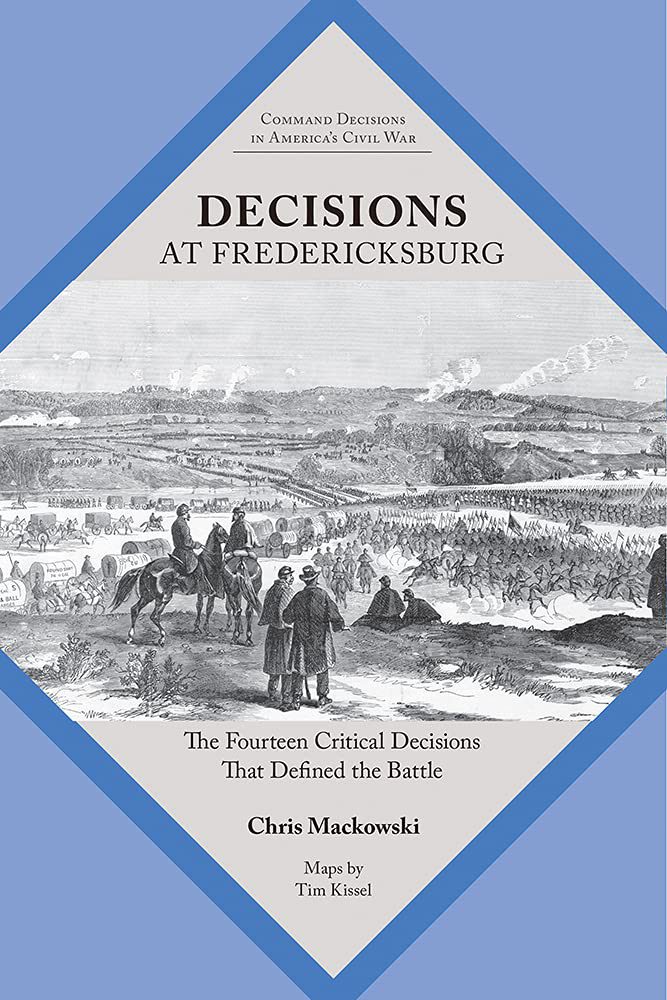
Decisions at Fredericksburg. By Chris Mackowski. Appendix, Notes, Bibliography, Index, Illustrations, Photos, 260 pp., University of Tennessee Press,
Aside from Gettysb Fredericksburg is my most visited battlefield. I have tra over virtually every site and s uncounted hours at the ‘sunken road.’ I have read numerous books and accounts of what transpired there. However, as time passed, my interests shift from ‘what happened’ to ‘why it happened.’ This book fulfill my expectations. The history presented is well annotated, with an ample bibliography for further study. A multitude of photos and illustrations are interspersed
assist in identifying participant events, and sites. Also included an order of battle. Each chapter begins with a brief anecdotal account of the participants and actions discusse there. Then the author lists all options available at a particular time, explaining each option in detail. Next comes the decisions made, and why they were chosen. Finally, we get a thorough explanation of the results of those decisions. It is here that reader can reflect on whether he is in agreement or not. I found this to be a wonderful process. For the most part I was in agreement with the author’s conclusions. The one thing I came away with is how political the Army of the Potomac leadership was. Politics and ego permeated all aspects of decisions and, in opinion, led to some disastrous results. One can lay blame on all the participants, from the genera to Lincoln himself. I don’t know how I missed this series. It is an excellent tool i understanding the ‘whys’ of Civil War battles. I plan on reading a few more of this series, perhaps all of them! I highly recommend you get one…, or a few…, or all of them, and test your own theories. These books are a must for any serious student’s library
Joseph Truglio, of Manchester, N.J., is a retired Motion Picture Technician who has a lifelong interest in the Civil War. He is past President of the Phil Kearny CWRT in N.J.
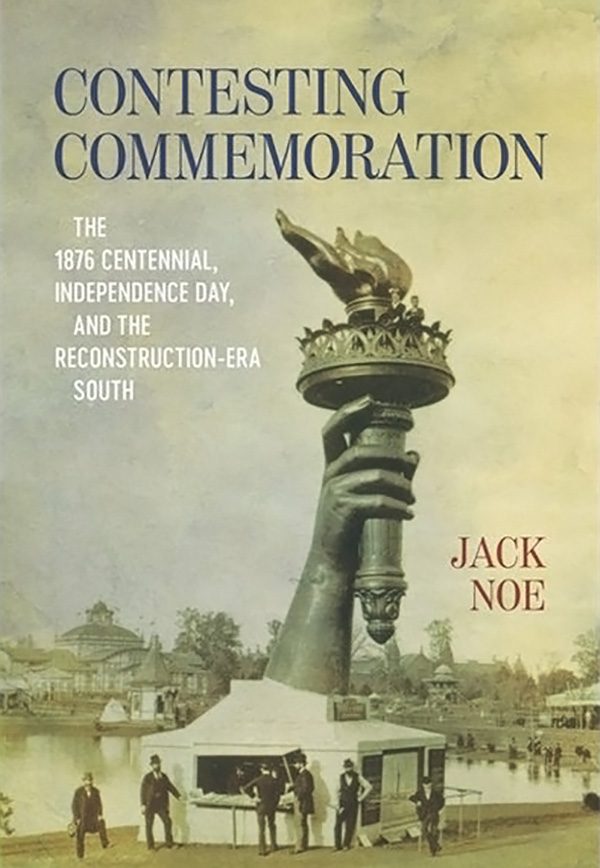
The Fourth of July and the 1876 Centennial exhibition Contesting Commemorations: The 1876 Centennia Independence Day, And The Reconstruction-Era South. By Jack Noe. Notes, Bibliography,
Between May and November 1876, a world’s fair called the International Exhibition of Art Manufacturers and Products of the Soil and Mine, also known as the Centennial Exhibition or Centennial was held in Philadelphia, Pennsylvania. It attracted more than ten million visitors, one fifth of the U.S. population. Its purpose was to celebrate one hundred years of national existence, presenting opportunity for whites, African Americans, Northerners, and Southerners to reflect and enga with ideas about their identity as Americans. It provided an opportunity for expressions of nationalism, patriotism, healin sectional wounds, or for the wh South to reject reconciliation following the Civil War. Togeth with the 1876 presidential elec of Republican Rutherford Hayes, Reconstruction ended partly due to agreements made with representatives from Florida, Louisiana, and South Carolina. Contesting Commemoration provides a captivat representation of post-Civil war reunion and reconciliation, using white Southern reactions to and involvement with these celebrations. Jack Noe offers a colorful discourse on the economic, social, and political aspects of reunification, and the difficulties behind the changes that occurred in a post Appomattox American identity. Throughout this well written
book, a comparison is made between the points of view of white Southerners and African Americans utilizing the voices of many.
study linking the recent work of historians such as Gregory
Downs, Anne Sarah Rubin, and Richard Zuczek. They suggest that white guerrilla-style terrorism, defiant white public, and Federal military control of the South, resisted the Radical Republican measures to completely unify and rebuild the New South during Reconstruction. A important argument is suggested by historian David Blight that sectional reunion was achieved at the expense of African Americans, resulting in reconciliation by bo north and Southern whites and the beginning of the Jim Crow era. In The 1976 Centennial, Independence Day, And The Reconstruction Era South readers will gain an understanding of how former slaves used the memory of the Revolutionary War, and its commemoration to demand the status of full citizenship as per the fifteenth amendment. Noe asserts that a reason for the Civ War was the emancipation of African Americans. Additionally, he further extrapolates the challenges between reunion and reconciliation in this deeply researched narrative. Little has been written on the Centennial. What has been published on the fair itself, and its design is very different than what is examined throughout this study. Noe emphasizes how America experienced and felt about the events and celebration of American history and the meaning of the Fourth of July throughout this title. The writer tells a story that the North and the South were moving away from its agricultural past and into an industrial future with increased importance on the railroad and other inventions for manufacturers, farmers, and people allowing the U.S. to become a world economic giant. Noe found that some southern women, such as Ellen Long of Florida, believed the Centennial would unite America, and restore the South to prosperity. Furthermore, he analyzed how over time that some Southern governments and businesses realized the Centennial was
an opportunity to showcase their great states and benefit economically by participating in the fair. Finally, this tapestry a focus of national memory and
the Reconstruction era to portra our sectional identities and
differences. This tome depicts nationalism fought for by the
commemorative activities such as celebrating our nation’s foundin and issues that Southern States had with the Centennial and the Federal government during Reconstruction. During this period, many African Americans were killed or harassed in the South, which resisted any recognition of citizenship for freed people. White Southerners both shunned and engaged with the celebrations of American nationhood. Noe contends that African Americans embraced the opportunity to claim full agency and citizenship. He further postulates that commemorations and historical memory during Reconstruction was intertwined with politics, biased newspapers partisanship, and racial divisio While Southern participation in the 1876 Centennial was limited with only Mississippi and Arkansas having any official presence, the Southern States finally had opportunities to market themselves in future fairs in Chicago, New Orleans, Atlanta, and Nashville during the late nineteenth century. The were linked to the idea of a New South, progress, and patriotism. The fairs included black exhibit that focused on education. Noe points out that the fairs forged link between race and progress during the Jim Crow era. In the end, he suggests that the United States was reunited but far from reconciled. This reviewer recommends this new volume.
David Marshall is a high school American history teacher in the Miami-Dade School district for the past thirty-five years. life-long Civil War enthusiast, addition to numerous reviews publications, he has given presentations to Civil War Round Tables on Joshua Chamberlain, Ulysses S. Grant, Abraham Lincoln, the Battle of Gettysbur and the Common Soldier. August 2022
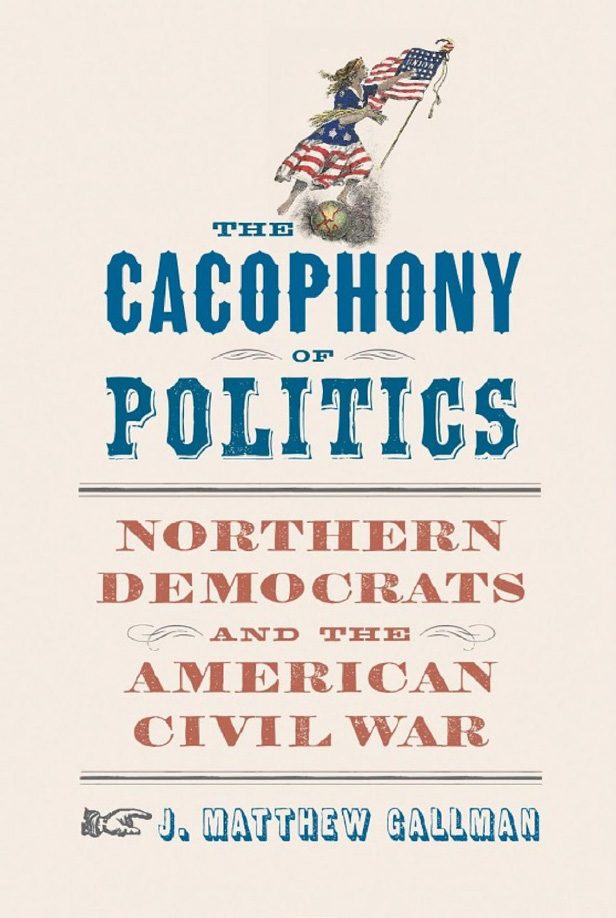
This book encompasses the views and attendant dilemmas o politicians and ordinary citiz as they try to define their po on the Lincoln Administration, the war, constitutional issues and emancipation. Northern Democrats were the loyal opposition to what conceived as a radical Republi usurpation of the Constitution
1 Year—4 Subsc Or send a check to: CSA International su
isual Aids Help Illustrate it was designed. The Democratic response was anything but unanimous. Rather, Democratic views existed along a broad spectrum from supporting the war to preserve the Union (W Democrats) to total opposition to Mr. Lincoln’s war and the trampling of individual libertie (Copperheads). Along these polar opposites were found politicians and citizens whose views were in flux, changing their place on th spectrum as casualties mounted, when Emancipation became a war goal, and when, geographically, they represented a constituency who either supported the war or opposed it. Democrats generally did not believe the war and emancipation should be won at th point of a bayonet but differenc settled through compromise and constitutional changes. The Democratic Party had been formed as a people’s protes against the concentration of pow in the federal government. Thus, is not surprising that in speech newspapers, and pamphlets Democrats cast themselves as defenders of the Constitution in the face of a radical Republican agenda. Individual Democratic leaders, e.g. Fernando Wood, Clement Vallandigham, George McClellan, George Woodward, etc., occupied different spots o the continuum of views on the war but each realized that polit were essentially local, familial
denham Court, Brunswick, GA 3152 subject to postage surcharge.
geographic, and ethnic. Each of these groups needed to be listene to if success at the polls was to the eventual outcome. J. Matthew Gallman deserves kudos for using a wide variety of personal narratives, e.g. Johnathan Hale, Willie Waller, Francis Sherman, Mant Marble, etc., newspaper articles, private communications, and diaries (including many from women on the home front) to illustrate the vast range of view held by people belonging to the Democratic Party. The vast majority of these individuals, and Democrats in general, were conservative, patriotic, merely opposing administration policies they believed ran amok from Constitutio restraints. They felt the Lincoln administration ran over civil liberties by suspending the writ of habeas corpus, closing down newspapers, and jailing dissidents, even incarcerating a United States senator and congressman. This book is filled with primary source material that allows a reader to hear the actua words of the minority party. This is a positive for the reader who wishes to form his own opinion on the validity of each Democrat’s position, but this strength is mildly subverted in the concluding chapter when the author applies 20th Century moral assessments and evokes moral outrage on 19th Century actors. It is difficult for an au to avoid this common tendency to judge politics by contemporary standards but essential for an honest attempt to discern motivations behind political positions 150 years ago. One historical error is noted. The lyrics to “A New Yankee Doodle” did not glorify the military exploits of Jubal
Early. Aside from this minor point, the book is eminently readable, instructive, thoroughly researched, and a welcome addition to understanding the actions of the loyal opposition during America’s most trying fratricidal war.
Wayne L. Wolf is Professor Emeritus at South Suburban College and the author of numerous books, articles and columns regarding Civil War history. He is the past president
of the Lincoln-Davis Civil War Roundtable and a frequent speaker on the Civil War circuit.
the Life of Jefferson Davis Following in the Footsteps of Jefferson Davis: Statesman – Soldier – Author – Planter – President. By Stan Cohen. Selected bibliography, 252 pages, Pictorial Histories Publishing
The author of this publication portrays it as a “pictorial histo of Jefferson Davis from his birth his family, wartime experiences, political life, Secretary of War, his presidency, his capture and imprisonment, and his death and legacy.” Stan Cohen’s objective is to present to “the reader a comprehensive look at one of American history’s most interesting and productive individuals.” In fact, Cohen has together a remarkable collection of visual aids to illustrate the and accomplishments of a man who qualifies as one of the most controversial in U.S. history. Jefferson Davis, in his nearly 90 years on the world’s stage, proved to be a talented, devoted, and energetic performer in a
wide variety of significant roles In fourteen chapters, this study represents Davis as a cadet,
military officer, cabinet member, congressional representati senator, president, prisoner of war, and elder statesman. Cohen has chosen to devote several pages of vis representations of each stage of Jefferson Davis’s life and career an effective way to permit the reader/viewer to follow along as they unfold. For example, included are various images of Davis in his role as president of the Confederate States of America, as well as pertinent flyers, posters, maps, notices, photographs, including Davis’s cabinet members and military
leaders, pertinent newspaper articles, personal residences in Montgomery, Ala., and
Richmond, Va., along with their architectural drawings and interio furnishings. In addition, there ar marble busts of key players in the Davis administration, historical statues, and structures that playe important roles during Davis’s administration, including St. Paul’s Episcopal Church and the Virginia State Capitol. Cohen devotes a chapter to Davis’s vice-president, t enigmatic Alexander Stephens, and multiple chapters deal with the Civil War period, as well as Davis’s eventual imprisonment. A separate chapter covers Davis’s time spent in retirement at Beauvoir in Biloxi, Miss. Throughout this illustrated history of the life and times of Jefferson Davis, the author places the reader at the scene and provides appropriat descriptive narrative. Although this publication is not intended a an analytical history, it does whe the appetite for further knowledge about Jefferson Davis, and those who played important roles in his life. A selected bibliograph provides sources to pursue further the life and times of Jefferson Davis, including William J. Cooper Jr.’s Jefferson Davis, American, and Jefferson Davis, The Man and the Hour by William C. Davis. Other recommendations include Jefferson Davis’s twovolume autobiography titled The Rise and Fall of the Confederate Government, and Varina Howell Davis’s biography of her husband, Jefferson Davis, ExPresident of the Confederate States of America. In effect, this pictorial histo offers an opportunity to observe Jefferson Davis in a variety of
roles during his productive, as well as more controversial, years. Following in the Footsteps of Jefferson Davis is heartily recommended. It serves as a reminder of the reservoir of knowledge still waiting to be discovered about the Civil War era.
Thomas J. Ryan is the former president of the Central Delaware Civil War Round Table, and author of the award-winning ‘Lee is Trapped and Must Be Taken’: Eleven Fateful Days after Gettysburg, July 4-14, 1863 with co-author Rick Schaus, and Spies, Scouts, and Secrets in the Gettysburg Campaign: How the Critical Role of Intelligence
Impacted the Outcome of Lee’s Invasion of the North, June-July 1863.
Powerful History of War’s Long-term Consequences
Invisible Wounds: Mental Illness and Civil War Soldiers. By Dillon J. Carroll. Notes, index, 368 pp., 2021. Louisiana State University Press, lsupres
The Civil War proved a transformative experience for Corporal Robert Bradbury a veteran of Battery D, First Pennsylvania Light Artillery. Decades after the conflict Bradbury’s sister Alice noted that her brother “was a perfect healthy boy and full of fun unt he came back from the army.” Pension records and Bradbury’s writings also indicate the war transformed Bradbury and took him, mentally, to a dark place. Bradbury’s experience, however, was not unique. Untold numbers of Union and Confederate soldie were forever transformed by the experiences of camp, campaign, and battlefield. While historia such as Brian Matthew Jordan and Sarah Handley-Cousins have contributed much to our understanding of the manner in which the conflict impacted soldiers psychologically, Dillo Carroll’s recent volume offers an essential contribution to th growing and important body of literature. Carroll, a history instructo at Butte College, centers this
diligently researched an deftly-crafted volume around the question: how did the Civil War damage “the minds of its participants?” Throughout the book’s eleven chapters the author rightly asserts that a variety of factors impacted soldiers’ mental well-being. In addition to the stresses of combat, Carrol convincingly argues that other factors including lack of sleep, environment, and food shortages took their toll on Union and Confederate troops. In some instances, Carroll notes that the influence of those forces on significant numbers of soldiers adversely impacted an army’s ability to function properly; an argument posited by other historians including one of the most esteemed in the field today, Carol Reardon. While some soldiers could not manage the conflict’s various stressors, Carroll notes that significant numbers of veterans i both armies employed an array of coping mechanisms throughout the conflict. Taking a cue from historian Kathryn Shively’s notion of “self-care,” Carroll analyzes how mechanisms such as repression, humor, religion, or immersing oneself in letterwriting proved useful. Some soldiers even engaged in the much frowned-upon practices of straggling or shirking duty to cope with the Civil War’s horrors Interestingly, however, Carroll asserts that the war’s emotional trauma among United States troops impacted white and African American troops differently. Carroll argues that the experience of combat, the cause of significant mental anguish among white troops, proved a cathartic experience for many who served in United States Colored Troop (USCT) regiments. The opportunity combat offered to engage and kill Confederate troops served as a form of therapy among USCT’s who struggled with the mental anguish of slavery. While Carroll does not suggest that black troop were entirely immune from the conflict’s mental ravages, the
Beyond an analysis of the war’s mental toll, an examination of th
lack of acceptance of veterans by some communities after the war ended, and an investigation into how poverty impacted veterans’
mental health in the conflict’s aftermath, Carroll broadens this book’s scope by examining how the mental health of veterans impacted families. While some families found the behaviors of their veterans an embarrassment and prompted families to hide veterans from the public eye, some behaviors created a dangerous environment in the home. One of Carroll’s subjects, George Bowen, a veteran of the 59th Illinois Infantry, illustrat this point. Bowen, wounded in the head during the war, frequently hit or threw things at his daught Jennie, behavior uncharacteristic for Bowen prior to the conflict. Some families attempted to deal with their veterans at home, but for others the task became to burdensome and family members made the difficult decision to admit loved ones into institution Sadly, as Carroll notes, the plac family members believed would aid veterans transformed by the conflict presented another set of challenges. Beyond the limitations of treatment and understanding of mental illnesses at the time, Carroll notes that conditions in these hospitals could be quite violent and endangered a patient’s physical well-being. The author’s evidence reveals that fighting occurred at times between patients, patients and doctors, and patients and attendants. Carroll’s study, deep researched and engagingl written, is an important book. It offers a reminder that although armies ceased fighting in the spring of 1865, some veterans and their families fought persona battles for decades after the conflict. For those seeking a deeper understanding of the Civil War’s long-term consequences Carroll’s history is essential.
Jonathan A. Noyalas is director of Shenandoah University’ McCormick Civil War Institute in Winchester, Virginia, a professor
in Civil War Era Studies at Shenandoah University, and founding editor of Journal of the
Shenandoah Valley During the Civil War Era. He is the author
or editor of fourteen books. Noyalas’ latest book, Slavery
and Freedom in the Shenandoah Valley during the Civil War Era, was published by the University Press of Florida.
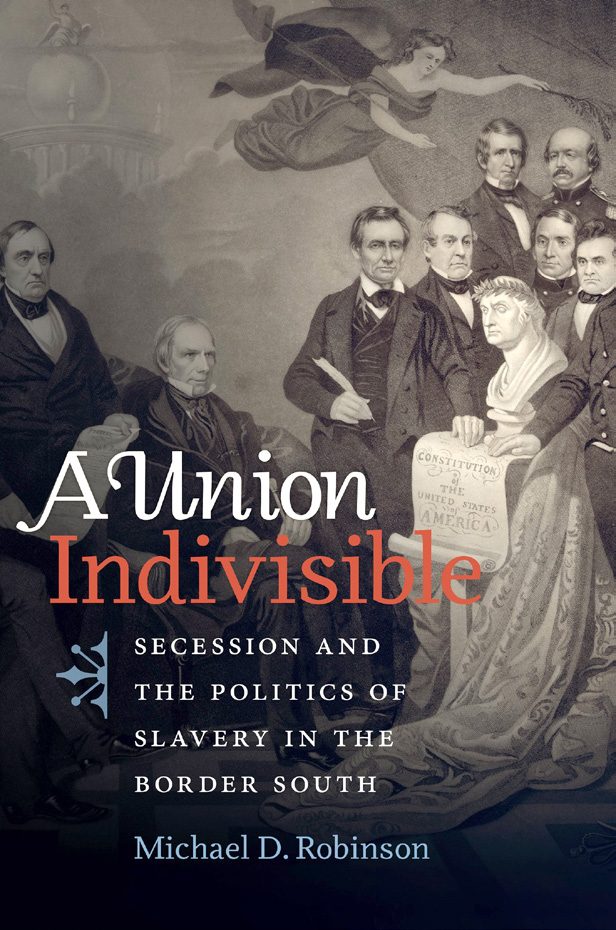
Border States Pulled in Two Different Directions A Union Indivisible – Secession and the Politics of Slavery in the Border South, by Michael D. Robinson. 2017, Chapel Hill, The University of North Carolina Press. 294 pp.,
It has often been said that Kentucky left the Union in 1866 to join the Confederacy. Why this came about is laid out in some detail in this book. While the author examines the politica and social turmoil that buffered four of the five Border States, Missouri, Kentucky, Maryland, and Delaware during the winter of 1860–1861, much of his focus deals with Kentucky and Senator John J. Crittenden of Frankfort, Kentucky. All four Border States were slave states, that is, slav was legal within their borders. Two of the three largest slave owning cities were in the border states, Baltimore and Louisville However, all four states chose t remain in the Union. The author’s premise is that t Border States saw the existing Federal government as the best guarantee to preserving the institution of slavery. To them, the United States Constitution protected their rights to own slaves and these rights were guaranteed by numerous federal
laws that further bolstered the rights of slave owners. Lincoln, they held, might have been elected president on a platform non-expansion of slavery, but th slave owning states controlled Congress. Therefore, Lincoln and his supporters were powerless to make any significant changes in the laws governing slavery. The Border State Unionists, however, were divided into two camps, unconditional and conditional. The unconditional Unionists supported any war effort by the Federal government to preserve the Union, while the conditional Unionists fought to preserve the Union as they understood it to exist on the day before Lincoln was elected president. The Kentucky Unionist who served in the U.S. Congress during the Civil War owned more slaves than the Kentucky Secessionist serving in the Confederate Congress. Front and center in this story were the efforts of Senator John J. Crittenden to preserve the Union. Just as Senator Henry Clay of Kentucky had negotiated compromises that ended various slavery based secession crises during the 1840s and 1850s, Senator Crittenden sought to orchestrate such a compromise during the winter of 1860 and 1861. That he was unable to find common ground for compromise was due to the fact that the tim for compromise had passed. Crittenden, when he was unable to draft a compromise satisfying majority in Congress, moved for calling a public meeting hosted by the states to find common ground to avoid war. Yet while this move for public meetings generated a lot of positive comments, it also failed to halt the drift to war. With his hope for a compromise settlement in ruins, Crittenden, in July 1861, introduced into Congress a War Resolution Act that did not hint any change in the Federal slaver policy. Its passage strengthened the Unionist hold in the Border