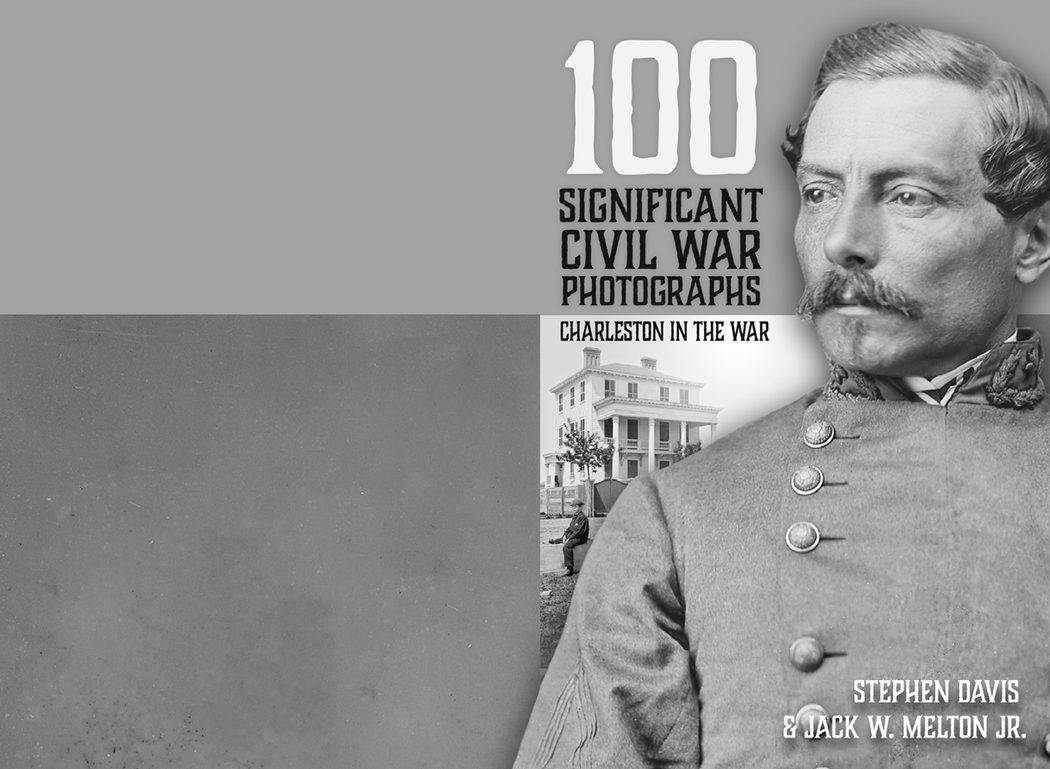
CHARLESTON IN THE WAR 100 Significant Civil War Photographs: Charleston in the War features restored images of scenes in the famed city, taken 1860–1865.
The cameramen include the better-known, such as George N. Barnard and George S. Cook, as well as some lesser-known ones: Samuel Cooley, Cha Quinby, the partners Haas & Peale, Osborn & Durbec. Text by Stephen Davis and Jack Melton accompanies each featured photo
describing the pictured scenes and the history surrounding them. The images depict a variety of settings: that portion of Charleston known Battery, the “Burnt District” (the area of the city destroyed by the of December 1861), the Charleston Arsenal, and the many churches that Charlestonians to call theirs “the Holy City.” Special sections of th devoted to the huge Blakely guns imported from England by the Confede
and close-ups of Barnard’s views. The history of Civil War Charleston goes back to The Defense of Charl (1890) by John Johnson, Confederate major of engineers, and to Remini Forts Sumter and Moultrie in 1860-’61 (1876) by Capt. Abner Doubleday second-in-command. Since then Charlestonians have contributed to the of their city, notably Robert N. Rosen and Richard W. Hatcher III. Th text surrounding 100 Significant Photographs draws on these and other A unique feature is its reliance upon the writings of actual particip Augustine T. Smythe (1842–1914) and Emma Edwards Holmes (1838–1910). As a contribution to this literature, 100 Significant Civil War Photographs: Charleston in the War offers rewards for all readers, from the casual novice to the serious student.
om Armed ’re salut active m plore SC’ hibits at