analysis of the latest and most s scholarship. Contact email: BookR The Confederate Detective
The Confederate Detective Service. By Ransom N. Hundley. Illustrated, bibliography, 258 pp., Knucklesamich Publishing,
The Confederate Detective Service: Duty and Dishonor, Choices Among Men. By Ransom N. Hundley. Illustrated, bibliography, Knucklesamich Publishing, 2022, 131 pp.,
These two companion volumes trace the formation and workings of the Confederate Detective Service, a branch of the Provost Marshal’s office. While covering a number of detectives and secret service operatives, two detective are singled out as illustrating t Detective Department; Theodore Woodall, who deserted and became a double agent, and Philip Cashmeyer, who remained true to the Confederacy throughout the war. Theodore Woodall, a Plug Ugly from the Pratt Street riots Baltimore, fit in with the rest o his former rowdies by engaging in bribes, extortion, and theft. After being dismissed along with the entire Detective Bureau in November 1862 by Gen. John Winder, he deserted, was arrested sent to Capital Prison, fled Nort and entered the U.S. Secret Service. Returning to the South, he was reinstated as a detective, fled with sensitive documents, and again spied for the North. His last act during the war’s aftermath was his role in trackin down John Wilkes Booth. He spent his remaining years as a saloon keeper and merchant.
Philip Cashmeyer became the personal detective for Gen. Winder and thus was appointed to the Detective Corps after the November 1862 purge. He guarded prisoners, delivered messages, and assisted Gen. Winder in Provost Marshal duties. He was temporarily detained in Castle Thunder after he made the mistake of sending harmless
our readers with timely icant Civil War research and
correspondence to his Baltimore relatives via Yankee paroled prisoners (Mrs. Patterson Allan Treason Letter). Cashmeyer was then released and appointed by Gen. Winder as sutler for Andersonville Prison. After Lee’s surrender, he was arrested in Richmond but later pardoned by President Andrew Johnson, who had received several letters attesting to his kind treatment Yankee prisoners. He too spent his declining years as a saloon keeper in Baltimore. While these two detectives represent the bulk of informatio on the workings of the Confederate Detective Bureau, other secret operations are covered including the St. Alban’ Raid, the City Point Explosion, Morris Greenwall’s treachery, the invention of the coal torped and the failed burning of New York City. Likewise, some of the more colorful detectives are covered along with their exploit including John Y. Beale, Samuel Maccubbin, John L. Weatherford, and John B. Williams. The author provides voluminous copies of records to document th pay and missions of the various detectives. Unfortunately, most are poorly photographed and unreadable. Likewise, numerous spelling and grammatical errors could have been cured by a good copy editor. The second volume, Duty and Dishonor, is a condensed version of the first volume and adds nothing in terms of new information. For those interested in the Confederate Detective Service, Th Confederate Detective Service provides a good starting point f understanding its clandestine ro
Dr. Wayne L. Wolf is Professor Emeritus at South Suburban College and the author of numerous books and articles on the Civil War, including Two Yea Before the Paddlewheel and The Last Confederate Scout. He is past president of the LincolnDavis Civil War Roundtable.
Custer Biography Strugg New Look at “Boy Gen Custer: From the Civil War’s Boy General to the Battle of the Little Bighorn. By Ted Behncke & Gary Bloomfield. Maps, photos, notes, index, 264 pp., 2020. Casemate Publishers,
In their preface, co-authors Behncke and Gary Bloomfield verbalize the question every reader will ask when they find Custer; “why do another biography of Custer? Hasn’t every bit of material been covered?” Their response is curt and unsubstantiated; “The answer will always be no.” The subsequent two hundred pages offer little to support t tenuous opinion that Custer deserves endless biographies solely because of the “irresist enigma” that enshrouds his name This hagiographic narrative of Custer’s life falls short of its ambitious goal to inspire a new understanding of “the Boy General” due to distracting errors, indigestible exaggerati and under-analysis of sources. Every book contains typos, b Custer suffers mightily from la of thorough copy editing by an observant editor. In the very f paragraph of Chapter 1, readers confront “the Mexican-American War of 1846 to 1948.” The book
continues to confuse dates, on one occasion describing a Union veteran as “writing in 1981.” Later, readers are mistakenly informed that Custer’s men captured Confederate general Joseph Kershaw in March of 1865 (it was April) and that th famous “Southern Gibraltar” of Fort Fisher was located in Sout Carolina, not in North Carolina
While certainly minor, these errors collectively undermine the authors’ credibility on large more important claims. These larger claims already rest on shaky soil due to extensive hyperbole. Assertions like “Custer’s meteoric rise… is simply without equal” sit uneasily with readers, especially when such claims simply hang as
independent statements without elaboration. Sometimes this
unadulterated praise manifests itself in flatly untrue statement including the assertion that “Custer never lost a battle durin the Civil War.” Among others, Custer suffered a humiliating reversal during February 1864 when tasked with leading 1,500 horsemen in a raid toward Charlottesville. Just a few miles from his objective, 200 disorganized Confederate horse artillerymen mounted battery horses and armed themselves with fence rails, bluffing Custer into a hasty withdrawal with his goal unaccomplished. So how can one claim Custer never lost a battle? Simple, by only asking Custer what happened. The only reference to this debacle in the book lies in a single quote pulle from Custer’s report on the affai in which the Boy General spun his unambiguous failure into a smashing success by claiming destruction of such valuable enemy infrastructure as horse harnesses. Therein lies the next, and greatest, shortcoming of the volume, under-analysis o primary sources. The cardinal rule of writing narratives is “Show, Don’t Tell.” But readers will continually find claims that never receive elaboration. Custer, we are told, was a great prankster at West Point, but we are never shown an example of the chicanery that allegedly endeared him to his classmates. We are told that Custer’s “superiors, and the press, were taking notice of his bravado”
Send your book(s) for review Civil War New 520 Folly Road, Suite
during the Peninsula Campaign, but are not shown a quote from superiors or newspapers from that time. Paradoxically, the book simultaneously suffers from an over-use of primary quotes. In the ninety-five pages that cover Custer’s boyhood through the Civil War years,
readers encounter an eye-rubbing eighty-four block quotations.
The majority of the text in the book’s second chapter is raw, dry swaths of stiff nineteenth century prose punctua with only brief analysis. On multiple occasions, block quotes consume entire pages. Indeed, even secondary sources earn quotations that gobble up entire paragraphs of text, especially the earlier biographies of Custe by Frederick Whittaker and Jeffrey D. Wert. Despite quoting so heavily from previous books and taking primary sources at face-value, little incisive anal arises on Custer’s early life, C War career, or demise at Little Bighorn. When readers pick up a book on Custer, they want to know its significance, “Why is this book on Custer more important than any other I could read?” Unfortunately, readers confront unsatisfactory circular reasoning that implies that “thi book on Custer is important because all books on Custer are important.” Custer buffs searching for an unfamiliar account or two describing the Boy General’s battlefield heroic will find this book’s lengthy compiled quotes useful, but a bit more editing and objective analysis would go a long way for future biographers to offer new perspectives on the Boy General.
Noah F. Crawford is a Ph.D. student in history at Texas A&M University. He studies the experiences of refugees and the intersection of social history a military history in the American Civil War.
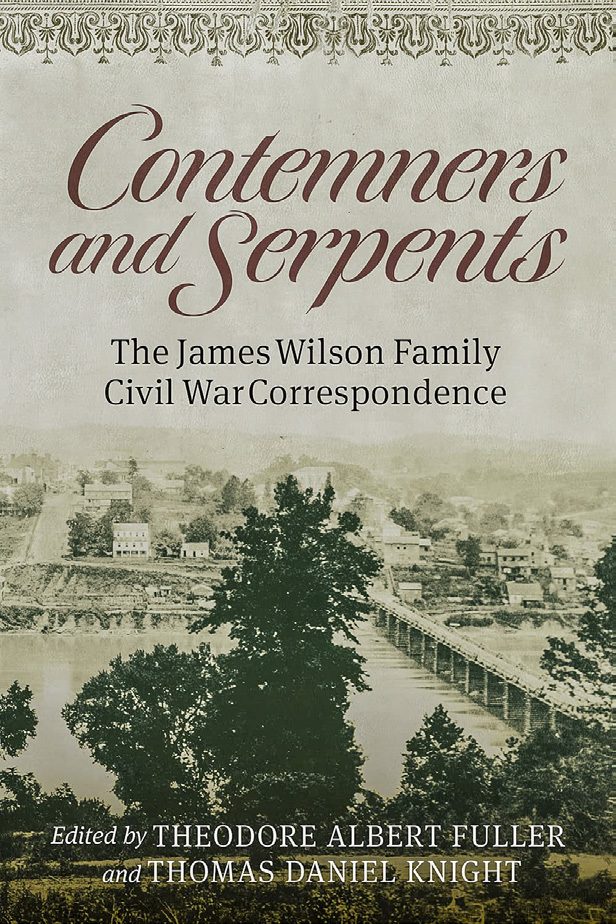
Edited by Theodore Albert Fuller and Thomas Daniel Knight. Bibliography, index, photographs, map, footnotes. 304 pp., 2023.
For nearly two decades, starting in 1834, James and Eliza Wilson labored for the Lord as Presbyterian missionaries in India. Five children were born to the Wilsons during their time in that faraway land. In 1852 James and Eliza, with their three youngest children, returned to the United States, where the two oldest had already been sent to boarding school. The return was meant to be an extended, but temporary, leave of absence. However, the Civil War intervened, altering the course of the Wilsons’s lives as it did the lives of nearly every family in the nation. This capably-edited collection contains approximately 85 letters
In Honor of a Fallen Nation Gould B. Hagler, Jr
written by all seven members of the family, plus a few penned by others, during the Civil War and
short time before and after. Although both Reverend and Mrs. Wilson were born in the North, they had ties to the Sout as well, especially Mrs. Wilson. When the country began to split apart most family members were residing in what would soon become the Confederacy. When it came time to choose, all seve with varying degrees of fervor, chose the South. All four sons served in the Confederate army, three as soldiers and one as a chaplain. The father, for a time worked as a hospital chaplain. Mrs. Wilson and daughter Bessie lived much of the time with relatives in the South. The letters reveal a close an loving family, whose members were widely separated and frequently on the move. Wherever they were, and however often they changed locations, they were linked together by the mail. The book’s single map shows about 75 locations where different family members lived, fled to, camped, battled, or wer imprisoned during the war and after. In these letters James, Eliza Jimmy, Joseph, Lute, John, and Bessie shared news about major goings-on and about personal matters; they described living conditions in camp and on the home front; they expressed their views about the political and military issues of the day; and they offered and sought financia aid and other kinds of help as needs dictated. The three soldiers had relati little to say about the battles fought. Far more common were expressions of their faith and t confidence in divine providence.
ue work contains a complete hic record of Georgia’s
to the Confederacy, a full tion of the words engraved , and carefully-researched on about the monuments
rganizations which built se works of art and their
inscriptions express a profound grief, praise the
bravery and patriotism, and e to the cause for which ht.
It is interesting to note that the two editors never met or communicated in any way.
Fuller died in 1990, his work unfinished. Knight began his part of the job two decades later when Fuller’s daughter offered him the opportunity to complete the work. While it is unclear which editor did what, it seems that Fuller wrote the text, interspersed with the letters, which orient the rea and provide context. The detailed information on the numerous friends, relatives, colleagues, a comrades mentioned in the letters is, I believe, Knight’s work. All survived the war. Two soldier brothers made it through without a scratch. The third was seriously wounded and lost a foot. The fourth brother preached in two Tennessee churches until 1864, when he joined the army as a chaplain. Father struggled much of the time to find adequate employment as a preacher. Mother and Bessie, housed most of the time with well-todo relatives, supported the cause with enthusiasm. Contemners and Serpents concludes with a chapter that summarizes, in a concise narrative, the stories of all the family members. This helpful recapitulation gathers up the bit and pieces scattered throughout the letters and the numerous footnotes. The chapter also carries the story forward through the family members’ post-war lives. The war threw their lives off course, but all survived the ordeal and, with varying levels o success, continued on.
Gould Hagler is a retired lobbyis living in Dunwoody, Ga. He is a past president of the Atlanta Civil War Round Table and the author of Georgia’s Confederate Monuments: In Honor of a Fallen Nation, published by Mercer University Press in 2014. Hagler speaks frequently on this topic and others related to different aspects of the Civil War and
has been a regular contributor to CWN since 2016. His email is
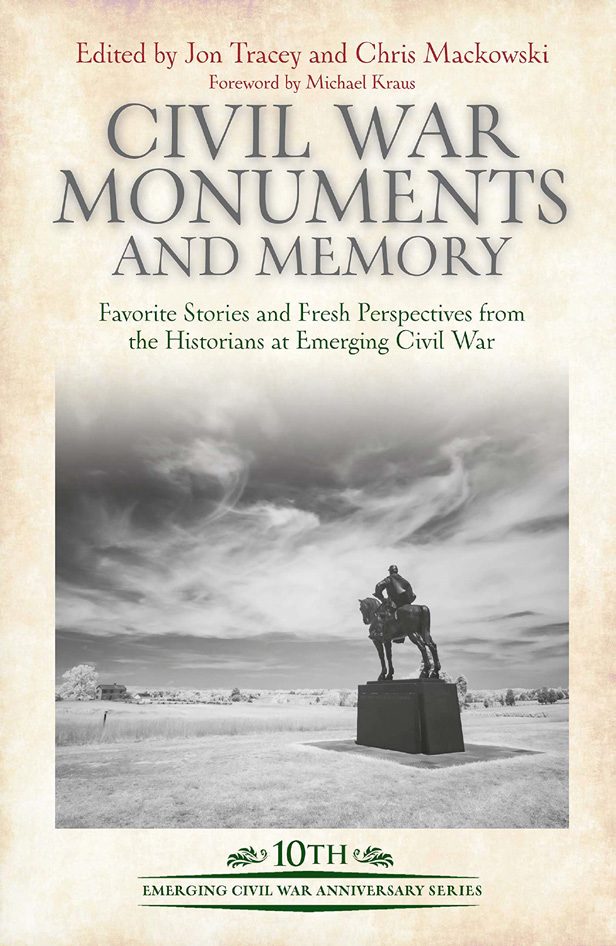
Fresh Perspectives Civil War Monuments and Memory: Favorite Stories and Fresh Perspectives from the Historians at Emerging Civil War. Edited by Jon Tracey and Chris Mackowski with a foreword by Michael Kraus. 336 pp., 2022
When Upton’s Regulars, the 121st New York State Volunteer infantry, decided to memorializ their participation in the Batt of Gettysburg, they agreed they would take on the task of raisi the money and designing the sculpture or statue themselves. The state had authorized all eighty-two regiments batteries that had represented state at Gettysburg to design a monument to mark their position on the battlefield. The rest wa to the survivors. The 121st swung into action immediately. The aggressive deadline of July 3, 1888, to ex the design and implementation of the project was missed by the 121st, but by 1889 they had succeeded. The state provided
amount of money today. James Cronkite, one of the unit’s las commanders, wrote that the
Gettysburg Battlefield would be covered with “such a collection of monuments, as the world has
never seen together. We do not expect to erect another memoria
it to “stand forever’ guarantee that “your descendants will not
be ashamed.” The survivors picked the nor slope of Little Round Top where the regiment came to rest on th early evening of July 2, 1863, after a forced march of some 30
miles. The final design included a panel honoring their esteemed commander Brigadier General (then colonel) Emory Upton. The monument was topped off with a sculpture of a soldier at “place rest,” leaning gently on musket, while intently watching the approach of the enemy and awaiting the order of battle. The soldier was no anonymous prototype but a depiction of one of their own, private Frank Lowe who donned the uniform and gear to pose as the regiment’s model in perpetuity. The intent or motivation of th establishment of the regiment’s monument was clear from the start; it was meant to honor its most illustrious commander and mark the spot on the most famous battlefield of the war where the boys from upstate New York stood during that famous encounter. Nothing more, nothing less. Lately, monuments, particularl those related to our “Great Tragedy” have become the center of controversy reaching boiling points in many communities. The deadly riot that occurred in Charlottesville in 2017, was but one of the many new controversies over memory and monuments in the American landscape. For the past decade, the histo of memory has taken first place among practicing historians, bot professional and amateur. An outpouring of books, seminars, lectures, and articles have look at the history of memory from all angles. As I wrote in my review of Peter Cook’s Civil War Memories: Contesting the Past in the United States Since 1865, “I don’t know who invented the history of memory, but David Blight’s, Race and Reunion did for Civil War history of memory
what Michael Kammen’s groundbreaking 1991 Mystic Chords of Memory did for the general history of American memory and tradition.” Jon
Tracey and Chris Mackowski’s editing of 39 separate entries o nearly every aspect of history a
memory touch on all the bases in their book Civil War Monuments
and Fresh Perspectives from the Historians at Emerging Civil
War. Several chapters take on th monumentation of Gettysburg. A majority of the entries were originally published as blogs at
The Best of the Very Best of Th America’s Hardscrabble
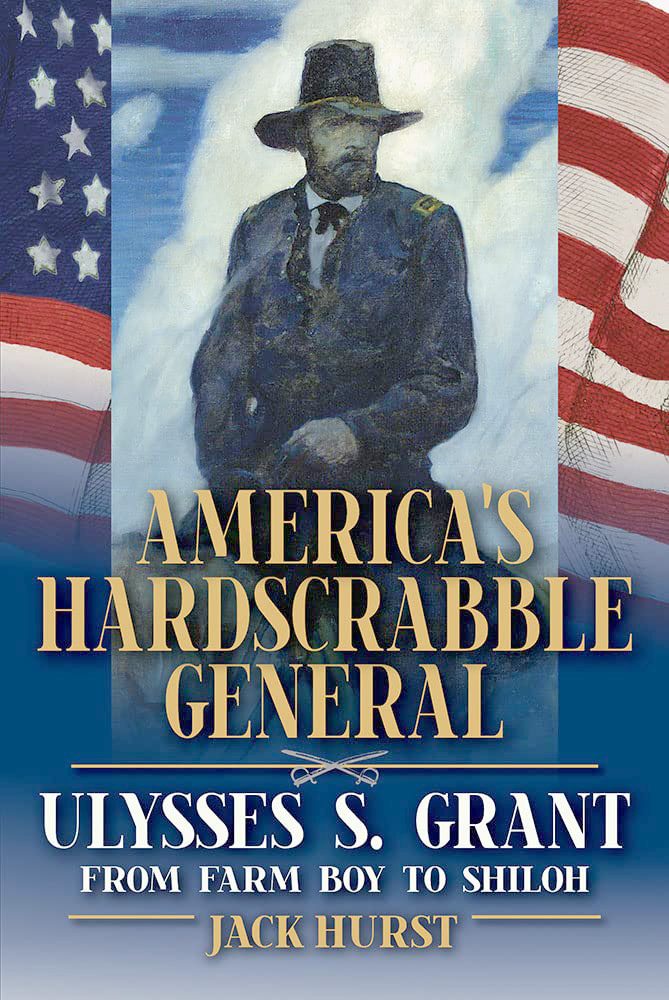
General: Ulysses S. Grant, from Farm Boy to Shiloh. By Jack Hurst. Southern Illinois
Today, the reputation of Ulys S. Grant is changing from that of a successful but mostly luck general with a drinking problem to a man now considered to be a model of outstanding American military leadership. Jack Hurst, author and retired newspaperman, gives readers a valuable look into how a man from the lower ranks of America society gained this eminence. In America’s Hardscrabbl General, he demonstrates how Grant’s humble beginnings and equally humble values better prepared him to lead volunteer American soldiers into battle a on to victory. Most officers in the American Army came from families of wealth and privilege; however, Ulysses Grant came from humble beginnings that included a fath
and a mother who was not well educated. Grant grew up on a farm in Ohio and only attended West Point because his father saw it as an opportunity to gai a college education for his son at public expense. Young Grant served in the Mexican War but resigned from the Army (in disgrace) when he was posted fa away from family and friends. He then experienced farm and business failures until the Civ War broke out, when Grant reenlisted. He was given command of a rowdy volunteer regiment, the 21st Illinois. His style of command, nothing like the usual imperious West Point method, turned the 21st into a model regiment. Hurst gives readers a detaile view of Grant’s early years, fr his Ohio youth to the Battle of Shiloh. Other authors rarely examine these years. Instead, Hurst focuses on this period entirely, explaining with detai how every event in Grant’s life added to his future success as a general who, by his nature, fought his Army in a manner Carl von Clausewitz would have recognized. Rather than relying on maneuvering and winning a place on a map, the cornerstone of Grant’s strategy concerned moving forward and beating the Confederate armies into submission. The argument is made that Grant’s military understanding came not from West Point but from his Ohio roots, his place in America’s nascent middle class, and his powers of observance and common sense. America’s Hardscrabble General pays particu attention to Grant’s service as quartermaster of the U.S. 4th Infantry in the Mexican War.
a successful army, in this case, led by Major General (and future president) Zachary Taylor, reall worked. Taylor’s leadership styl contrasted with General Winfield Scott’s, but Grant watched both generals win a war. He observed how the average soldier should b treated and noted the importance of supplying his troops. Pages 67-76 analyze Grant’s Mexican War experiences in a way usually reserved for his Civil War exploits. Hurst puts in context Grant’s decisions in many situations, firmly basing them on observed and participated-in experiences in that earlier war. This terse analysis sets Hurst’s work apart from other Grant biographies. The depth with which Grant’s early career is examined is invaluable. Many are familiar with Grant’s work at the end of the Civil War, but this book puts those experiences in their proper place as the outcome of Grant’s earlier life. His “rooki mistakes” at Forts Henry and Donaldson, and even Shiloh, his evolving feelings about warfare and the plight of newly-freed slaves, all are examined. So is ability to handle not just alcoh but the rumors concerning its consumption being spread as far as Washington. Grant’s friendships with U.S. generals Sherman, McPherson, and “Old Brains” Halleck, as well as his issues with political general Jo McClernand, and eventually with Halleck are given equal importance in the evolution of the General Grant, who led the Union to a complete victory in the American Civil War. If any reader considers him/herself a true Grant enthusiast, this book must be in the bookcase, preferably toward the front.
Meg Groeling received her master’s degree in Military
History, with a Civil War emphasis, in 2016, American Public University. fr
Savas Beatie published her first book, The Aftermath of Battle: The Burial of the Civil War Dead in the fall of 2015. Her second book, First Fallen: The Life of Colonel Elmer Ellsworth, the North’s First Civil War Hero was published by Savas Beatie in 2020. She is a book reviewer regular contributor to the blog Emerging Civil War. She lives in Hollister, California in a 19 bungalow with her husband, her cats, and a lot of books and roses.
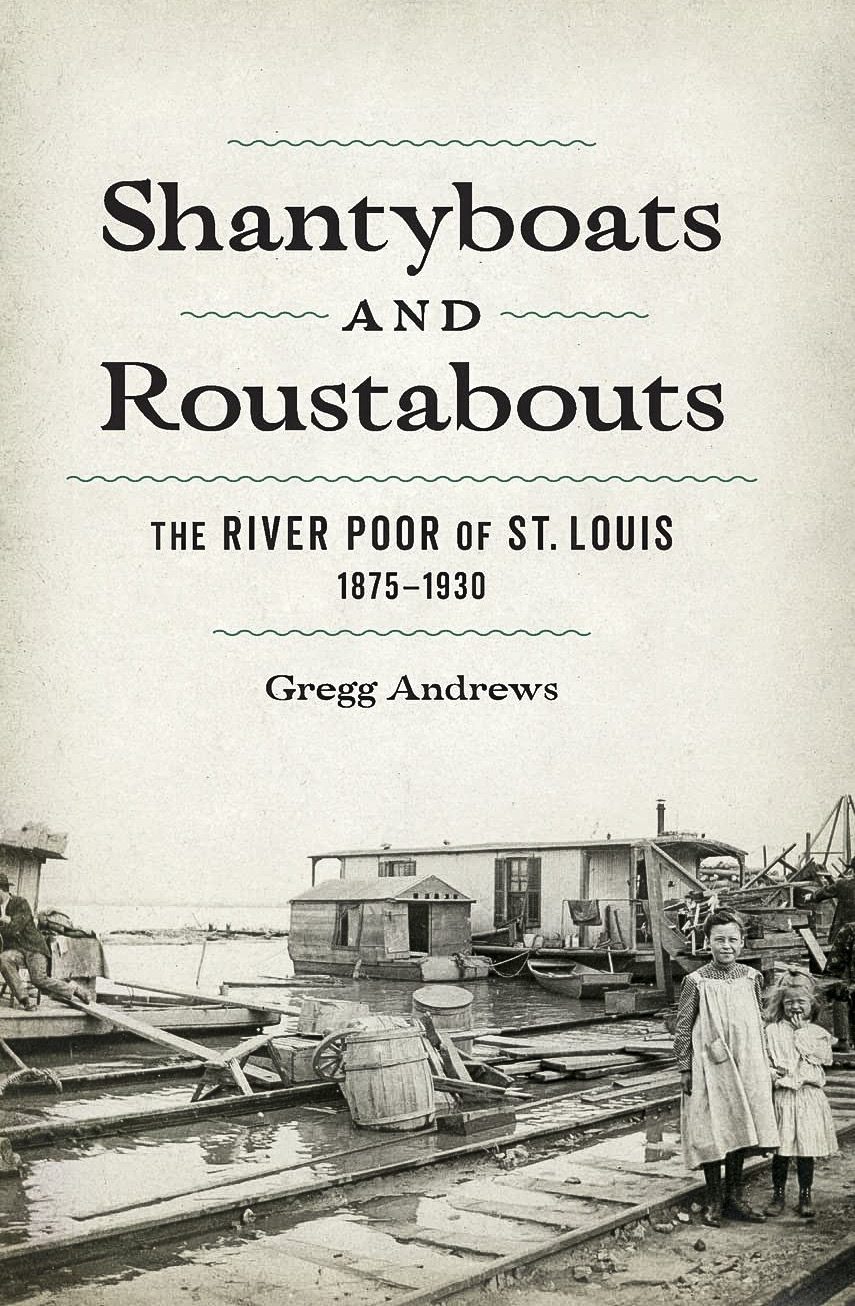
Highway of the Poor Shantyboats and Roustabouts: The River Poor of St. Louis, 1875–1930. By Gregg Andrews. Illustrated, Notes, Bibliography Louisiana State University Press https://lsupress.org, 2023, 323
Gregg Andrews uses the Mississippi River bottom towns and squatter settlements near th St. Louis levee to tell the stor of the Mississippi River’s poor and their unique culture. While poverty reigns in these camps, a vibrant culture is evident. Th author uses the stories of these “forgotten” people to reveal the life of those whose stories are seldom told. These were the “river rats,” water gypsies, and river trash whose life on the Mississippi was a struggle but was not devoid of a vibrant culture all their own. From black roustabouts, river nomads, and white shantyboat travelers, they consisted of former slaves, day laborers, wanderers, and vagrants, drawn to the waterway by unique circumstances. Yet, they had one thing in common; The regimentation, bureaucracy, and industrialization gripping
America in the late 19th Century had no appeal to them.
through which the lives of these river poor could be viewed,
how their lives were shaped and what mark they left on American history. One of their principal traits was the credo to always help fellow boats and their inhabitants when in need, clannishly protecting each other from outsiders or trouble-makers Their livelihood depended on the river; whether they captured driftwood, sold cut lumber, fished, told fortunes, searched pearls, or became moonshiners, they seldom left the river life loved. Their shantyboat settlements
swelled with industrialization an the depressions of 1873, 1882, and 1893; yet all was not without danger. Violence occurred on the riverfront. Police and politician harassed roustabouts and local boatsmen, fines were levied, and the notorious workhouse beckoned for t hose who could not pay. Gambling, prostitution, and drinking were a way of life. Labor strikes resulted in physica confrontations with ship captains Additionally, mother nature tried the nerves of the river rat Storms, tornados, floating ice sheets, floods, disease, and rive snags reminded wharf residents that nature was not to be taken lightly. Life on the river was not for the faint of heart yet th roustabouts and residents endured its hardships, created a blues, ragtime, and jazz culture to sing its praises while they eked a liv from its waters. Their writings told of medicine boats, mission boats, river preachers, swamp healers, and showboat minstrels that added to the mystique of living on the Mississippi. It was a colorful life that added a grea deal of “common folk” heritage to American culture. The life of roustabouts and steam packets virtually disappeared by 1930 when industrialization and technology transformed Mississippi river culture. Houseboats and yachts filled the spaces formerly occupied by shantyboats. Work disappeared as the lumber industry folded. Wharfs were getting a middle and upper class facelift. City planners and politicians began transforming the river front. The old days faded to rural river areas where the depression breathed new life into old frontier traditions. This book, although not directly Civil War related,
combines voluminous primary source material into a fascinatin picture of life on the Mississipp
the life line of the Confederacy and the home of a culture of poverty enjoyed by river folks. It is very readable, engaging, comprehensive and would make a great addition to an historian’ library to understand the culture of the river.
Dr. Wayne L. Wolf is Professor Emeritus at South Suburban College, the past president of the Lincoln-Davis Civil War Roundtable, and the author of numerous books and articles on the Civil War, including the Last Confederate Scout and Heroes and Rogues of the Civil War. May 2023
William Barksdale CSA: A Biography of the United States Congressman and Confederate Brigadier General. By John Douglas Ashton. McFarland,
William Barksdale Mississippi has finally gotten a Confederate general’s due: a book-length biography. And it’s a good one. John Douglas Ashton’s William Barksdale CSA is thoroughly researched, capabl written and comprehensively organized. Best of all, its subj provides for a most interesting read. Born in middle Tennessee in August 1821, Barksdale was schooled locally, attended college for a couple of years, taught himself law and was admitted to the bar. In 1839 he moved to Mississippi and opened practice in Columbus. He helped edit a newspaper in the 1840s, became a prosperous planter and slaveowner, and got interested i politics. When the Mexican War began, Barksdale was elected commissary captain in the 2nd Mississippi. The conflict ended without his seeing combat. As slavery tensions rose in the 185 Barksdale emerged as a vocal States Righter, though he oppose
secession (at least at the time) After election to the U.S. House in 1853 Barksdale continued to
thread this needle until Black Republican intransigence drove him to call for Mississippi’s secession. He held his House sea till his resignation after his s Current Event Listin To see all of this year’s c
seceded in January 1861. When the war started, Barksdal was elected colonel of the 13th Mississippi. The regiment arrived at Manassas just in time for the big battle. Fighting as part of Early’s Brigade, the 13th helped drive the Federals from the field Then Colonel Barksdale’s sky darkened. On August 10, during a march toward Leesburg, he imbibed too freely, got drunk and started telling off his offic and men. Col. Shanks Evans, his superior, had him arrested, not so much for intoxication as for mistreatment of the officers, 32 of whom called for Barksdale’s resignation. A court of inquiry ultimately filed no charges, and within a month the colonel was restored to command. At Leesburg (Ball’s Bluff) Barksdale demonstrated “his characteristic aggressiveness.” Then, during the fall of 1861 the War Department brigaded the Confederate Army of the Potomac by states; the Mississipp Brigade consisted of Barksdale’s 13th along with the 17th, 18th and 21st regiments. Dispatched to Magruder on the Peninsula, the Mississippians fell back on Richmond when McClellan began pushing toward the capital. Then the Seven Days started. At Savage Station, Southerners had their opinion changed as to whether one Confederate could whip five Yankees, as one Mississippian attested (he couldn’t). At Malvern Hill, after three color bearers dropped their flag, Colonel Barksdale snatched it up and led his men forward. Such fearless conduct earned “Old Barks” the respect of his men. Here the three Mississippi regiments were among the seven Confederate regiments “which suffered the highest casualties,” but Ashton doesn’t offer the numbers. At Sharpsburg Barksdale again led a charge of his brigade that put the enemy to flight in the West Woods.
The author’s research is very impressive: manuscripts,
newspapers, memoirs secondaries. I was pleased to see frequent quotations from Capt.
James Dinkins’ memoir, reprinted by Morningside in 1975. Ashton’s eye for detail allows for funny anecdotes, such as when Lee observed a soldier
eating persimmons. The general admonished the young man against eating astringent food. “I am not eating it for food, General,” came the reply; “I am only trying to make my stomach fit my rations.” Now for the moment we’ve all been waiting for. One of the more familiar and widely reproduced illustrations Battles and Leaders is Allen Redwood’s drawing, “Barksdale’s Mississippians Opposing the Laying of the Pontoon Bridges” (III, 87). Colonel Barksdale is not shown here, but in Turner’s Gods and Generals he is, in all his impressive heft (two hundre pounds, 5'11"). In the movie (a portrayed by Les Kinsolving) Barksdale looks very much like photographs show him, of considerable heft (200 pounds, 5'11". The colonel doesn’t have a speaking part, but in th screenplay, as his troops fire Yankees are crossing the river yells, “Keep it hot, boys!” The when the enemy enters town, it’ “Let’s go, Mississippi! It’s ho to house now! Make ‘em pay for every step!” As with all McFarland paperbacks, this one is richly illustrated. I counted photographs, 21 illustrations, and 11 Hal Jesperson maps. The author took a number of picture himself—impressive.
Stephen Davis’ next book, on how the National Intelligencer covered the Atlanta Campaign, will be published by Savas Beat later this year.
H Monuments . . . . . . . . . . from page 35 Emerging Civil War. A smattering
are original pieces for this publication, and equal time is given to monuments as well as memory. Author Chris Heisey sets the tone in the first chapt which is entitled “Photographing Monuments,” which is followed by Kristopher White’s “What is a Monument?” White successfully teases apart the confusing array of monuments, markers, tablets, memorials, statues, and every conceivable manner of presenting history to the general public and most importantly, intent or motivation. Flowing nicely into that concept is Chris Mackowski’ (not every contributor in this book was named Chris!) “When a Monument Gets its History Wrong” which addresses the misplacement of Lee in the wrong place at Antietam. Physically, this book sports a editors’ note, acknowledgments, a foreword, 38 entri contributor’s notes, a postscrip and an index. The contributor’s notes intrigued me. Of the 27 authors in this compilation, only three admitted to earning a PhD, a few had the Masters. In a recent article published in th New York Times, University of Washington associate professor of international studies Daniel Bessner, argues that “This is Actually the End of History.” He contends that academe is not turning out enough PhD’s and tha “Americans are fighting over the past while historians disappear. The existence of emerging civil war authors, with or without their PhDs, their strict adheren to tight logic, judicious use of
primary sources, and ability to communicate, refutes the doomsday scenario that history i dead. As far as Monuments and Memory is concerned, perhaps the neediest area of conversation should focus on intent or motivation. We need to continue to unravel the original intentions of the builders of th monuments/memorials. It is becoming increasingly clear from much recent scholarship that the Daughters of the Confederacy were intent on not only honoring the Confederate soldier but to perpetuate the myth of the lost cause. The writing in this new examination of monuments and memory by Tracey and Mackowski remind us that there i a vast difference between histor and nostalgia. Our challenge is understand the difference.
After 43 years in the museum field, Cilella devotes his time collecting American pri and maps and writing. His most recent books are Upton’s Regulars: A History of the 121st New York Volunteers in the Civil War (U. Press Kansas, 2009). His two-volume Correspondence of Major General Emor Upton, (U. of Tennessee Press, 2017), received the 2017–2018 American Civil War Museum’s Founders Award for outstanding editing of primary source materials. Upton’s love letters 1868-70, (Till Death Do Us Part) was published in 2020 by the Oklahoma University Press. His current book, the memoirs of Dewitt Clinton Beckwith of Upton’s Regulars (McFarland Press) is due out this year.
es & Belts fied Relic & Document & Head Gea & Currency Flags
ar Show rgia Trade Ingle Park GA 30720 & 5, 2023