I would have done justice to Yankee virtues, if they had had any, but since that infamous march of Sherman’s and their insolence in bringing negro soldiers among us, my feelings are so changed that the most rabid secession talkers, who used to disgust me, are the only ones that satisfy me now.8
Today’s idiom is “C’mon, Fanny, and tell us what you reall think,” but we don’t have to coax her.
Yankee, Yankee, is the most detestable word always ringing in Southern ears. If all the words of hatred in every language under heaven were lumped together into one huge epithet of detestation, they could not tell how I hate Yankees….I used to have some Christian feelings towards Yankees, but now that they have invaded our country and killed so many of our men and desecrated so many homes, I can’t believe that when Christ said “Love your enemies,” he meant Yankees.9
One afternoon Fanny and a friend were taking a walk downtown when “two drunken Yankees ran across the street at Mary and me and almost knocked us down, whooping and yelling with all their might.” “And the Yankees pretend to be a civilized people!” she exclaimed. “It is sad to think how things changing. In another generation or two, this beautiful country of ours will have lost its distincti
civilization and become no better than a nation of Yankee
Alas, it was into the den of th very Yankee shopkeepers that Fanny ventured in the summer of 1865 after a Northern relative ha invited her up for a visit. It di take long at Cousin Lilla’s house for her to notice that “Yankee
ideas of hospitality are very different,” she observed. “There a primness about a Yankee house, that keeps me in constant terror lest I should put something out o order….The Yankee way is much more economical and orderly than ours—but I can’t help liking ours best.” Even the way they talked caused cringes: “I cannot get ove my horror of that abominable ling
that all these Yankees have—it sounds so coarse, so unrefined.” “The more we see of Yankee society, the less we like it,” ou diarist confessed. One afternoon Lilla led a carriage ride through Newark, and all she could talk about in pointing out the big mansions was how their owners had made their money. “They all belong to merchants or manufacturers,” sniffed our diari who commented that in the South men distinguished themselves as planters or soldiers. “Almost everyone of the elegant residence that have been pointed out to me, she sniffed, “are owned by people who have grown suddenly rich by the manufacture of shoe pegs, trunk straps, or some contemptibl little thing of that sort.”
A Yankee manufacturing town like Newark is certainly not the place that one would choose for its society. Give me a thousand times over, our elegant Southerners, with their poor old dilapidated homes. I would rather today, marry a poverty stricken Southerner without a home, than be mistress of one of these splendid establishments with a miserable plebeian who knows nothing beyond the shoe peg and tape business, for its master. It is people, and not their surroundings, that make society.
“I thank the Lord I am not a Yankee,” she entered in her journal that September, after having gotten more than a taste o her cousin’s lifestyle.11 When Fanny returned to Washington, she turned to occasional writing. Perhaps it wa the disciplined composition of he journal that led Frances to recko that she had a knack for it— cacoethes scribendi, as they used to call it, the knack for writing
or maybe the urge to. Either way, in as early as February ’65 she
marked out for myself,” meaning that of writing, and affirmed tha her pursuit of it would leave no time for marriage. She was so determined to succeed that in June 1865 she declined to sign a friend’s photograph book until
she had become a “celebrated female.”12 Back then, there weren’t many vocational paths open to women, teaching being among the most common. Andrews, though, didn’t like the idea of being stuck with “a black-board and twenty stupid children.” But women novelists could write and sell their writin even if it were under a pseudonym
Fanny’s was “Elzey Hay”: Elzey came from the name of a family friend, Confederate gener Arnold Elzey, and Hay, probably taken from the name of the family home. She scored her first hit with an article for the New York World that appeared on August 21, 1865. Others followed, including one titled “Dress Under Difficulties,” about Southern women’s efforts to look fashionable even amidst wartime shortages of sartorial finery. The essay appeared in Godey’s Lady’s Book, the popular women’s magazine published in Philadelphia. There were outlets closer to home, though, and one was Scott’s Monthly Magazine. Founded in Atlanta shortly after the end of the war, the monthly featured pieces on war history, short fictio and items of general interest. Between spring 1866 and fall of ’69, Scott’s carried eight articles by Elzey Hay. It was Scott’s that first let the cat out of the bag as to its contributor’s identity, when one volume’s index listed a piece, “In Fashion and Out of Fashion,” by “Miss Fannie Andrews.” By 1872, it was pretty well known in the American literary world that “Elzey Hay” was Frances Andrews. She explained the reasons for her several years of anonymity in an article at the time “The great beauty of anonymous writing is to protect one against the bores and the other annoyances of a small reputation, till one can claim the advantages of a great one,” she declared. In truth, Frances Andrews probably did not possess a “great” reputation; but as a young single woman of thirtysomething years, she had reason to be pleased with what she had accomplished so far.13 One of the features of our I Thank the Lord I am Not a Yankee is that we have collected all eight of Miss Andrews’ pieces appearing in Scott’s (from extant issues at the Atlanta History Center), and
reprinted them. So far as we know, this is the first time they have be
At work on novels during this time, Frances had her first, A Family Secret, published in 1876. Several more followed, during which years she nurtured a keen interest in botany. She wrote several texts on the subject, as we
as articles for scientific journals As another bonus in our book we reprint “Botany as a Recreation for Invalids,” in which she relates how, after ill health sent her for long sojourn in Florida, she hunted and collected lots of local flora, the while cuing readers how easy it would be for them, too.14 For years Miss Andrews taught French and literature at Wesleyan
Female College in Macon, University of Tennessee Press Georgia, and lived out her days, 2002). purposefully having never married, 4. Stephen Davis, ed., I Thank in Rome, Georgia. She departed the Lord I Am Not a Yankee: this life in December 1931, and is Selections from Fann buried in Washington’s Resthaven Andrews’s Wartime an Cemetery.15 Postwar Journals (Macon: I recently gave a presentation to Mercer University Press, the Washington Civil War Round 2023), 283 n. Table, and thought of getting into 5. Stephen Davis, What the town a little early to pay a visit Yankees Did to Us: Sherman’s to Resthaven. But I didn’t, as I Bombardment and Wrecking wondered what I would say to of Atlanta (Macon: Mercer her at her gravesite that I had not University Press, 2012), xvii already said to her during the time 6. Donald Davidson, Still Rebels we’ve been together. Still Yankees and Other Essay I’m an old Rock ‘n’ Roller, so (Baton Rouge: Louisiana State I’ll close with lyrics from The University Press, 1972 [1957] Band’s song, “The Weight,” 7. I Thank the Lord I Am Not a Robbie Robertson’s hit on Music Yankee, 12, 14, 29. from Big Pink (1968): 8. Ibid., 123, 147, 159-60. 9. Ibid., 31-32, 59. Catch a cannon ball now to take 10. Ibid., 173, 175. me down the line 11. Ibid., 284, 288-90, 292-93, My bag is sinkin’ low and I do 295, 304. believe it’s time 12. Ibid., viii-ix. To get back to Miss Fanny, you 13. Ibid., 184-85, 187, 305; know she’s the only one [Mary T. Tardy], The Living Who sent me here with her Female Writers of the South regards for everyone (Philadelphia: Claxto Remsen & Haffelfinger, 1872), Yep, it’s time to get back to 216. Miss Fanny. For those seeking to 14. Ibid., 305-309; Charlotte A. join me, I heartily recommend The Ford, “Eliza Frances Andrews, War-Time Journal of a Georgia Practical Botanist, 1840-–931 Girl. Georgia Historical Quarterly, vol. 70, no. 1 (Spring 1986), Notes 63-80; Miss E. F. Andrews, 1. Barbara B. Reitt, “Eliza “Botany as a Recreation for Frances Andrews” in Kenneth Invalids,” Popular Science Coleman and Stephen Charles Monthly, vol. 28 (April 1886) Gurr, eds., Dictionary of 779-81. Georgia Biography, 2 vols. 15. Charlotte A. Ford, “Eliza (Athens: University of Georgia Frances Andrews: A Fruitful Press, 1983), vol. 1, 29-31. Life of Toil,” Georgia 2. Eliza Frances Andrews, Historical Quarterly, vol. 89 The War-Time Journal of a no. 1 (Spring 2005), 25-56. Georgia Girl 1864–1865, ed. by Spencer Bidwell King, Jr. Steve Davis’ ruminations on (Macon: Ardivan Press, 1960). General Lee, “Why Robert 3. Eliza Frances Andrews, E. Lee Still Matters,” which Journal of a Georgia Woman appeared in our January issue, 1870–1872, ed. by S. are now posted on the website Kittrell Rushing (Knoxville: of the Abbeville Institute.
“I Thank Eliza Frances Andrews (1840–1931) received a strong education and was
the Lord I a successful writer and educator. Her War-Time Journal of a Georgia Girl Am Not a surely ranks among the most observant Yankee...” and intelligent wartime memoirs by a Southern woman. Edited with commentary by Stephen Davis, I Thank the Lord I Am Not a Yankee includes selections of her wartime and postwar journals which are most expressive of her Confederate patriotism and Southern pride.
Stephen Davis is author of ten books on the Civil War, most of which treat th Atlanta Campaign. His two recent volumes on Confederate General John Bell Hood have won several prizes, including the Flet Pratt Award of the New York CWRT.
From the Editor I frequently describe myse a “Stonewall Jackson fanboy.” People who know me find it amusing, but I wonder how people who don’t know me take it. Dead Confederate generals are well out of fashion these days. Most people don’t bother with nuances and assume the word “Confederate” equals “Lost Cause.” The terms aren’t interchangeable, but th conflation is an unfortunate p of the Lost Cause’s legacy. It has made all things Confederat almost radioactive these days. fact, I’ve seen that radioacti spill over to the Civil War wr large, where people think it’s bad thing to be interested in. I prefer to think in terms laid out for me by my friend J Coski, historian at the former Museum of the Confederacy: there’s a difference between t
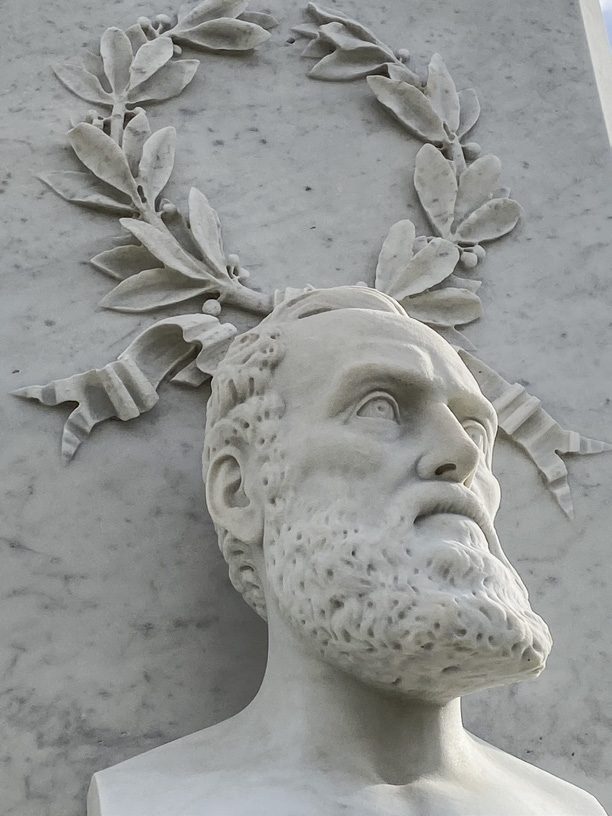
A bust of Stonewall Jackson adorns the side of a Confederate monument in New Orleans’s Greenwood Cemetery.
study of the Confederacy and the reverence of it. The former is important if we want a fuller understanding of our own history the latter inhibits and clouds understanding. This all came to mind for me the weekend of Jackson’s 199th birthday. Also, I recently spent time in New Orleans tracking down a pair of Stonewall Jackson monuments in two of the city’s historic cemeteries. New Orleans a place Jackson never visited, i the only location that still has Jackson statues on display. I have a fondness for Jackson because he was my gateway into the Civil War. When I first met him, I had my eyes clouded by magnolias and moonlight. In the two-plus decades since, I’ve come to appreciate what a truly human man he was, filled with inconsistencies, successes and failures, and crazy quirks (and not just the stereotypical lemon sucking). He had a mixed record as a commander, and the cause he fought for was deeply flawed, but he was unwavering in his affection to his family and his devotion to God and duty as he understood it, perhaps too rigid at times, it seems to me. There’s an old saying that yo should never meet your heroes, and that would be true for me and Stonewall. He doesn’t strike me as someone I’d want to have a beer with, especially since he didn’t drink. But I’ve found a l to admire about him and a lot to learn from him. I acknowledge hi faults and imperfections and eve embrace them with humor. Most importantly, there remains for m that sentimental attachment one has for all old friends, even af life has taken them on different roads. That is what it means to me t be a Stonewall Jackson fanboy. — Chris Mackowski, Ph.D. Editor-in-Chief, Emergi Civil War
Emerging Civil War Symposium at Stevenson Ridge
If you’re thinking about attending the 2023 Emerging Civil War Symposium, don’t delay getting your tickets! We anticipate selling out by the
spring. This year’s Symposium will focus on “1863: The Great Task Before Us,” touching on a variet of military history topics in ou programs and tours. Follow the Symposium Spotlight blog posts on Wednesdays as we announce the speaker panel and other exciting details. More details, and a link to order tickets, are the website. Join us on August 4-6, 2023, a Stevenson Ridge in Spotsylvania, Va., for an in-person weekend of history, discussion, and camaraderie!
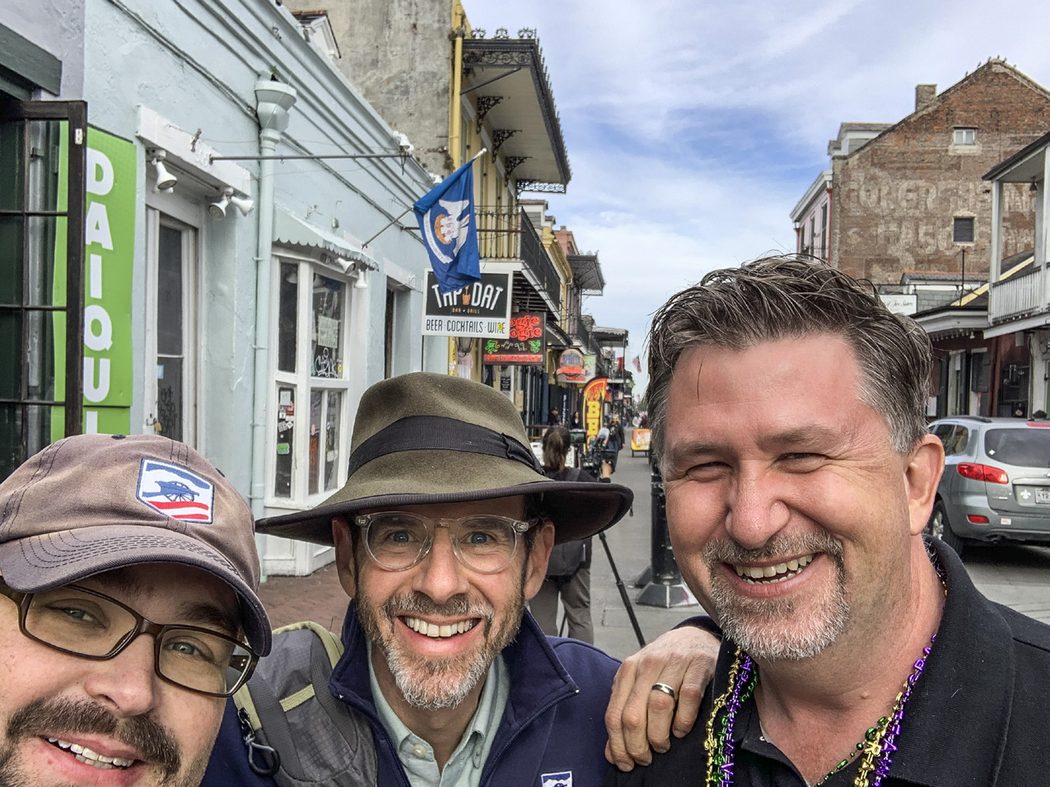
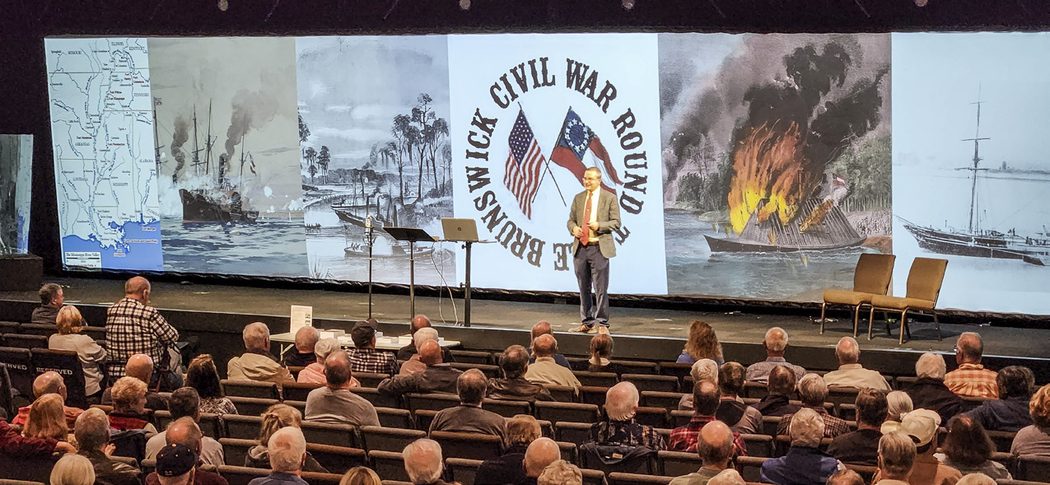
Sarah Kay Bierle enjoyed starting 2023 by hiking Second Manassas Battlefield on the 2nd day of January! Neil Chatelain was busy over the winter break from classes with a Christmas trip to New Orleans to see family and do lots of research and writing. He had a blast speaking about his book Defending the Arteries of Rebellion at the Brunswick, N.C. Civil War Round Table on January 3. It was a wonderful group that had over 300 in attendance! Stephen Davis’s new book is just out: I Thank the Lord I Am Not a Yankee: Selections from Fanny Andrews’s Wartime and Postwar Journals (Mercer
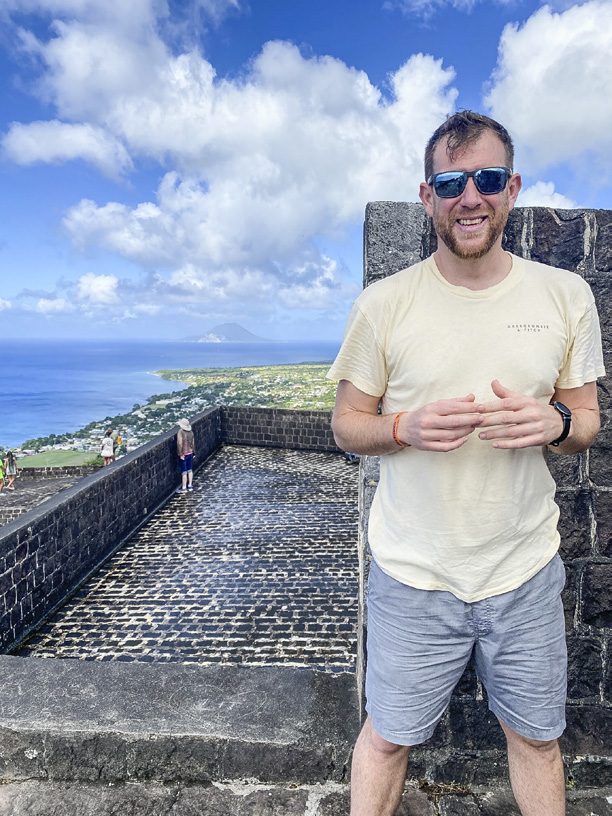
hardback). It’s a new edition of Andrews’ The War-time Journal of a Georgia Girl (1908) and her postwar diary (2002); rather excerpts from both books, chosen by Steve as most expressive of her Confederate patriotism, Southern pride (even in defeat), and continued excoriation of Yankees. Bert Dunkerly has been working with Appomatto Court House Historian Patrick Schroeder to edit Chris Calkins’ The Battles of Appomattox Statio and Appomattox Court House (originally published in 1987). The book has been updated and has new maps and photos. Savas will be releasing it this spring Phill Greenwalt writes from the Caribbean: “Off my right shoulder, where the cannon is
Neil Chatelain defends the arter Brunswick (NC) Civil War Roundta
Kris White, Garry Adelman, and a cameo daytime appearance on of a video project for the Ame
Phill Greenwalt found Revolutionary War history in the Caribbean.
pointing, is the island of St. Eustatius (Sint-Eustatius). On November 16, 1776, in response to the United States vessel Andrew Doria firing a salute, governor of the Dutch island, Johannes de Graaff, ordered a reply salute fired by guns of island’s defenses. This was th first salute given to an Ameri vessel and flag following the Declaration of Independence signed that summer Philadelphia. President Frankl D. Roosevelt presented a plaqu to the island in 1939. Some co American history in the warm Caribbean.” Meg Groeling’s neighborhood has been hit hard by the heavy California rains. She says: “S paddling.” Steward Henderson
Mackowski made Street as part attlefield Trust.
gave a Martin Luther King Day presentation at Jubilation in Fredericksburg, Va., on Monday evening: “African Americans in the Civil War: Predecessors to Dr. Martin Luther King Jr.” About 50 of their residents attended. Jubilation by the Silv Companies is a seniors’ luxury community. In February, he will present the “United States Colored Troops in the Overland Campaign” for the Chambersburg Civil War Seminars as part of a line-up that also includes ECW’s Dan Davis, Chris Mackowski, and Kris White, among others. Pat Kelly-Fischer is looking forward to finally meeting some ECW folks in person in February, and taking advantage of being on the East Coast to visit the Monocacy and Antietam battlefields for the first time. From Frank Jastrzembski and his work with Shrouded Veterans: “Government-issued veteran headstones for Colonels George W. Gowen and John W. Kester recently arrived at St. Luke’s Episcopal Churchyard Germantown, Penn. Gowen was killed at Petersburg, Va., in 18 Kester died at the Friends Asylu in Philadelphia. Both markers will be installed this spring. “Two projects need support: “First, Colonel Semy Tredwell Moore’s ve headstone arrived at Wooster Cemetery in Wooster, Ohio, but the cemetery won’t install
you’re interested in donating to help cover the expense. “Second, there’s an ongoing project to mark the grave of Brigadier General Jean Napoleon Zerman’s grave in Colma, Calif. His wife and grandfather will al be honored on the custom marker. You can read about Zerman’s fascinating life as a soldier of fortune and donate to this cause March 2023