looks as if McClellan was pushing the enemy hard to the river.”
The editors were right about the armies meeting at Sharpsburg, but a fierce battle would be fought before the Confederate retreat began.
The Thursday edition contained the usual jumble of dispatches reporting on various matters related to the Maryland Campaign. Any reader would be mightily confused. The editors provided the usual summary, context, and interpretation. “Reports from the Army of the Potomac last night cover nothing but success….. Lee’s army, large as it is, will certainly be annihilated before it can get back to Richmond.”
A dispatch printed on Thursday erroneously reported that the Federals had reoccupied Harpers Ferry on Tuesday at 7 p.m. Relying on this false information; the editors opined that Federals’ possession of that point “almost precludes the possibility of the fording of the Potomac by the rebels.”
The big news on Thursday was the battle at Sharpsburg. Several dispatches (sent on Wednesday) reported on Tuesday’s fighting, mainly an artillery battle as the armies readied for the main event. Dispatches sent Wednesday night provided some information on the main fight that day: “The battle has continued all day today, but no official news has yet been received of its results,” one correspondent wrote. Another dispatch claimed “a glorious victory after a great battle.” This report noted that “no particulars of the battle have yet been received” but this much was known: “the carnage on both sides was
awful.” In addition to the news, there was also the usual optimistic speculation: a report from Hagerstown assured the readers that “the entire rebel army will be captured or killed.”
Friday’s paper provided more detail on Wednesday’s combat. Two dispatches from the Army of the Potomac headquarters, sent Tuesday night and Wednesday, described the action on those two days. These dispatches were accurate, but naturally they accentuated the positive. The Wednesday dispatch did imply that the victory was incomplete. After Burnside’s force crossed the bridge and ascended the hill, “our troops were forced to retire before a superior force, the rebels knowing that if they lost the ridge the complete rout of their army would be the result. They fought with great desperation.” The army’s dispatch estimated that each side suffered about 10,000 casualties.
The Press, a Democratic paper, was full of high praise for General McClellan. The editors’ summary commented on the “magnificent victory” achieved on Tuesday and Wednesday and predicted more victories as McClellan’s army “gather[s] up all its energies afresh to smite the audacious enemy.”
On Saturday the Press ran a dispatch printed earlier in the New York Tribune. Through this dispatch, written on Wednesday night, Philadelphia’s readers got an accurate summary of the battle. The dispatch described the positions of the armies at day’s end, with the one road open for the Confederates’ retreat. The assessment of the results: “Neither [side] can claim a complete victory….”
The editors’ summary displayed the usual optimism. McClellan, having won this great victory, “has completely changed the aspect of affairs in the north from gloom and uncertainty to cheerfulness and brightened hope.” The Press magnified McClellan’s achievement by exaggerating Confederate strength, claiming that on Wednesday he had “fought an enemy numerically equal to his own.” Still, the editors understood that as great as McClellan’s victory was, its strategic result was still in doubt. Would Lee’s army be annihilated or captured? The editors said “it is impossible to know.”
Another dispatch in Saturday’s paper must have arrived too late for the editors to take into account as they penned their summary. This dispatch, sent from Frederick on the 19th, said that Lee had gotten away. The correspondent seemed to anticipate the severe criticism that was about to come McClellan’s way, and began to make excuses for him. On the 18th, the reader was told McClellan was about to launch an attack on the Confederate left, “when it was discovered that the enemy were apparently posted on our right in some force, and threatening a flanking movement.” The perspicacious general “saw the ruse, and at once changed front,” thus checking the Confederate threat.
The correspondent put an interesting slant on the Confederates’ escape. Having crossed the river, they “were driven off…in the direction of Winchester.” A careful reader would note that the driving off was done by artillery north of the stream, not by infantry nipping at Lee’s heels.
Lee was certainly appreciative of McClellan’s cautious disposition. Lincoln was not. McClellan failed to follow up his victory as his commander-in-chief wished. He was relieved of command on November 6.
A review of the Philadelphia Press in the days before and after the climactic battle at Sharpsburg indicates that readers in the North, at least those with access to daily newspapers in major cities, had information on the Maryland Campaign that was reasonably up-to-date.
As for accuracy, we need to repeat and stress the adjective “reasonably.” The correspondents often relayed news gleaned from questionable sources. I get the impression that the reader was implicitly told “take it for what it’s worth.” Lee was reported to be wounded; Longstreet to be killed; Hill to be captured (which Hill not specified). The Press also published wild overestimates of Confederate strength.
These limitations notwithstanding, an attentive reader could stay abreast of developments during the week and by Saturday read a coherent narrative of Wednesday’s battle.
Sources: The Philadelphia Press and much else can be accessed at https://panewsarchive.psu.edu/. My thanks to Stephen Davis and Bill Hendrick for allowing me to see the pertinent passages in their upcoming book which shed light on history’s first draft as read by Atlantans.
Philadelphia is 175 miles or so from Sharpsburg. What about a town in the Confederacy 650 miles away from the action? How long did it take the news to travel to Atlanta? How accurate was the story Atlantans were reading?
In their upcoming book The Atlanta Daily Intelligencer
Civil War Artillery Book
Civil War Artillery Projectiles – The Half Shell Book. This hardbound book has 392 pages, and is full-color with 850 photographs.
$89.95 + $8 media mail for the
Covers the Civil War, Stephen Davis and Bill Hendrick address these questions. As one would expect, the news Atlantans read was less up-to-date, less detailed, and less accurate than the first draft of history read by Philadelphians.
The first of Lee’s forces to enter Maryland crossed the Potomac on September 4. The Intelligencer reported this news on September 13. On September 17, as Georgia troops were defending the crossing at the Rohrbach Bridge, the Intelligencer’s editor wrote that he had no reliable information on developments in Maryland and that he would not print mere rumors.
News of the September 14 fighting at South Mountain reached Atlantans on the 20th. The paper reported the capture of Harpers Ferry on September 21, six days after the event. Also on the 21st, the Intelligencer published Lee’s September 8 proclamation to the people of Maryland.
The September 23rd edition contained a telegraphic dispatch about the battle fought on the 17th. The report announced a victory in that bloody clash, and, with even less accuracy, claimed that the enemy was routed when the fighting renewed the next day.
On September 24 the paper referred to a troubling report that Lee was back in Virginia. Ten days after the battle the editor repeated the claim of a Confederate victory and, with no apparent basis but wishful thinking, stated that Lee was still in Maryland, after Lee had been south of the river for five days.
For a detailed report on the Battle of Sharpsburg, Atlanta readers had to wait until the 28th. This came in a dispatch written just hours after the battle ended. It reported the repulse of the Federals. There was nothing on the retreat, of course, and no commentary on the earlier report of the rout said to have occurred on the 18th.
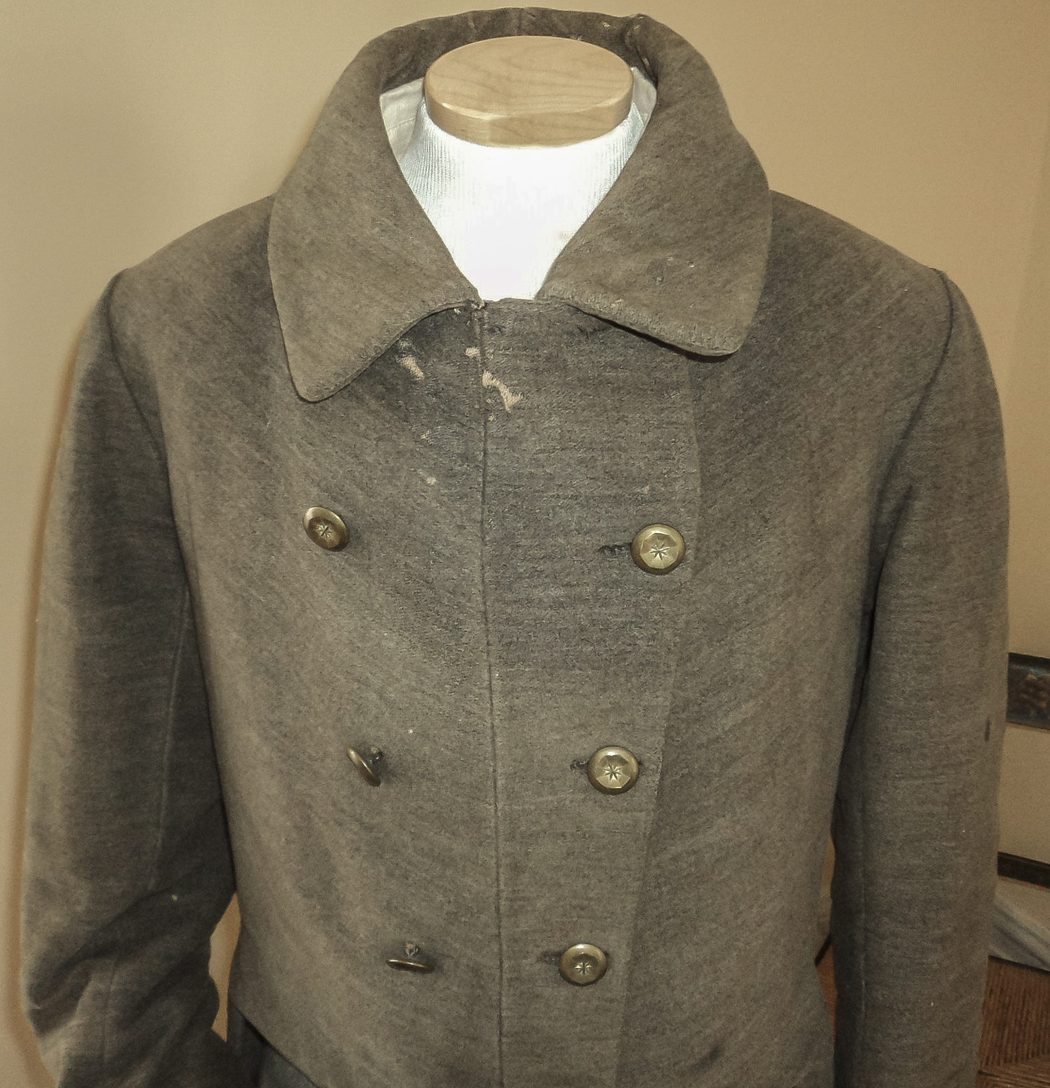
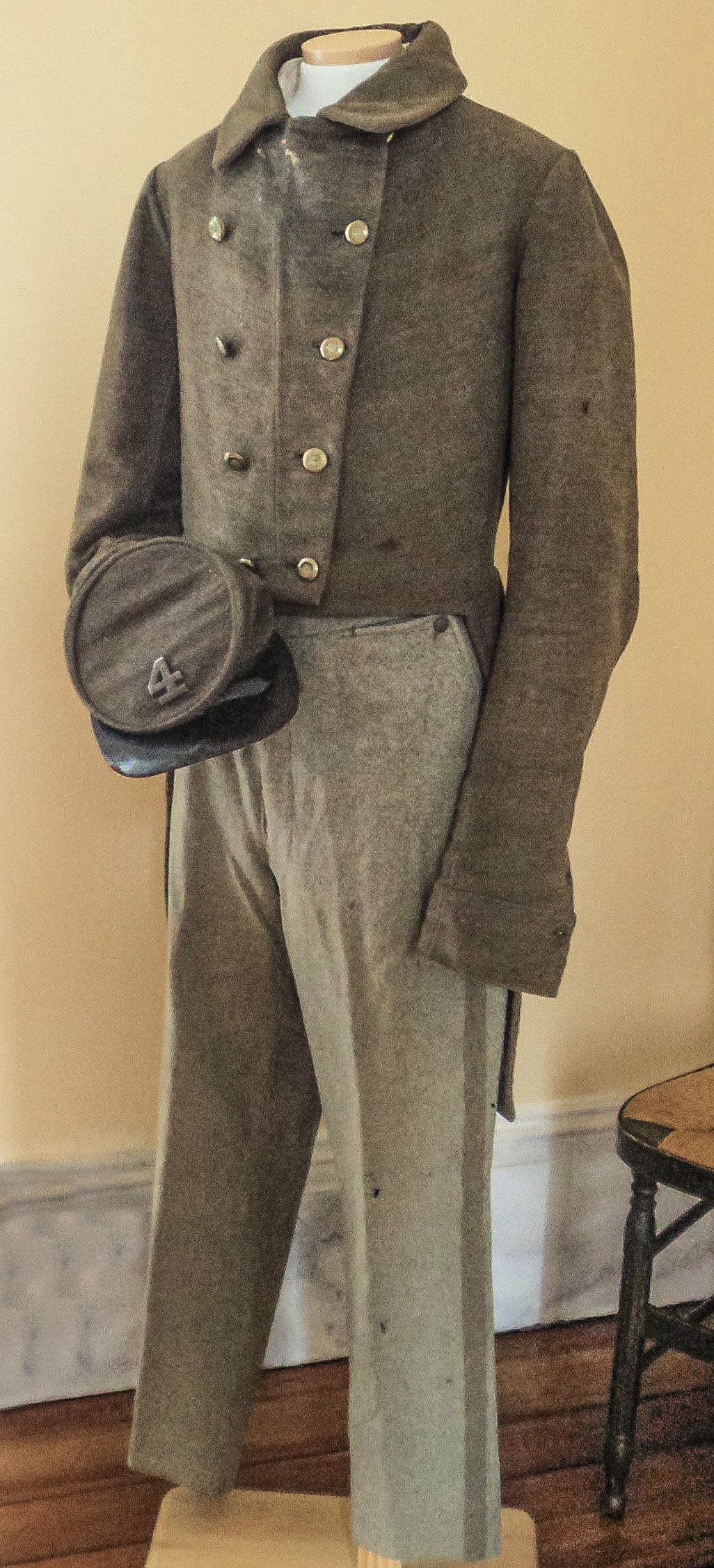
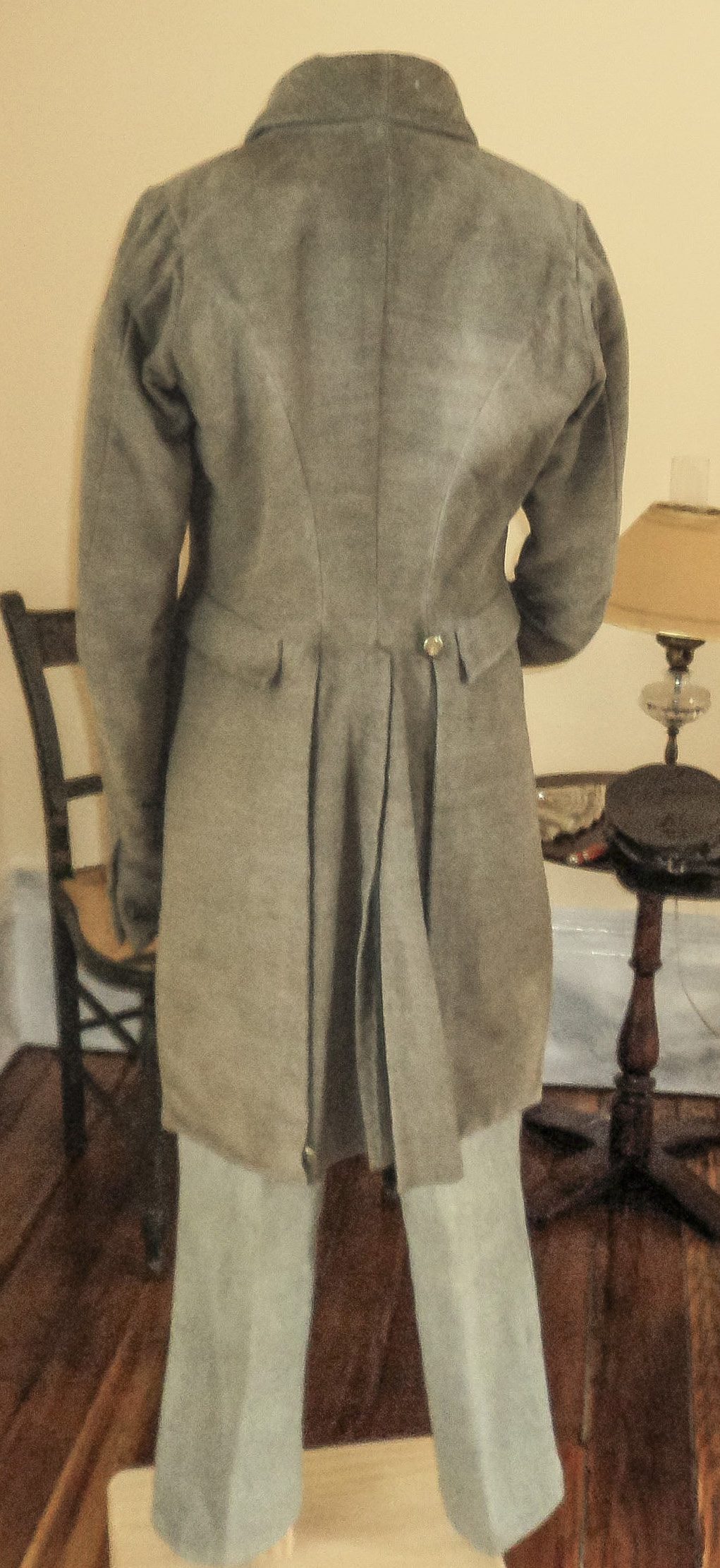
The history associated with this uniform starts generations before it was made. For our purposes here, we will begin with Captain Fielden Hale of eighteenth century Franklin County, Va. The earlier Captain Hale fought at Kings Mountain and Guilford Courthouse during the American Revolution. He was a contemporary of Nathan Hale of “I only regret that I have but one life to give for my country” fame. Whether he was related to the hero I do not know. He raised six sons, all of whom fought in the War of 1812; at least one did not return. His son, Captain Louis Hale Sr. and his wife settled on what was probably a land bounty in Elk Creek, Va., in what is now Grayson County. In the following years of peace and plenty Elizabeth Bourne Hale bore a son prophetically named Peyton Nathan Hale, after the famous revolutionary Hale. As if by a familial curse, this Hale was to die a no less heroic death for his country in the Second War for Independence, than his namesake in the first.
By 1861 the Hale family was one of the most prominent in their section of Virginia, and when 35 year old Peyton called for volunteers to defend Virginia from invasion, the response was overwhelming. That section of Virginia had been settled by Revolutionary War veterans, and their offspring proved worthy of their sires. So many men volunteered that a shooting match was devised to sift the men. The men were required to shoot at a target 100 yards away while at a dead run; the best one hundred shots were selected to be members of the “Grayson Dare Devils.” The men enlisted on April 24, 1861, with Nathan Peyton Hale Jr. as captain.
Almost immediately the men left for Richmond. They made such a striking appearance that newspapers from Ohio to Texas carried an account of their travels. This allows us to track their movements very closely. The May 4, 1861, edition of the Macon Telegraph writes:
“The Richmond Whig publishes the following extract from a letter received by a gentleman from Lynchburg. With Whig, we share in the mortification expressed by the writer. “We were all much mortified today at the return of the Grayson Dare Devils–they numbered 100 precicely, all picked and unfailing rifle shots, and the finest looking body of men I ever saw. The services of such men ought never be rejected. I am told they shed tears at the Junction, [Manassas] when met with a dispatch ordering them to return. The state could not furnish them with arms; they were willing to fight to get them if they had to do it with rocks. Without intending to disparage any, I must say I never before saw, in one body, of more efficient looking men for war purposes, and I am very much mistaken if they cannot whip any four hundred Yankees that could be sent against them.”
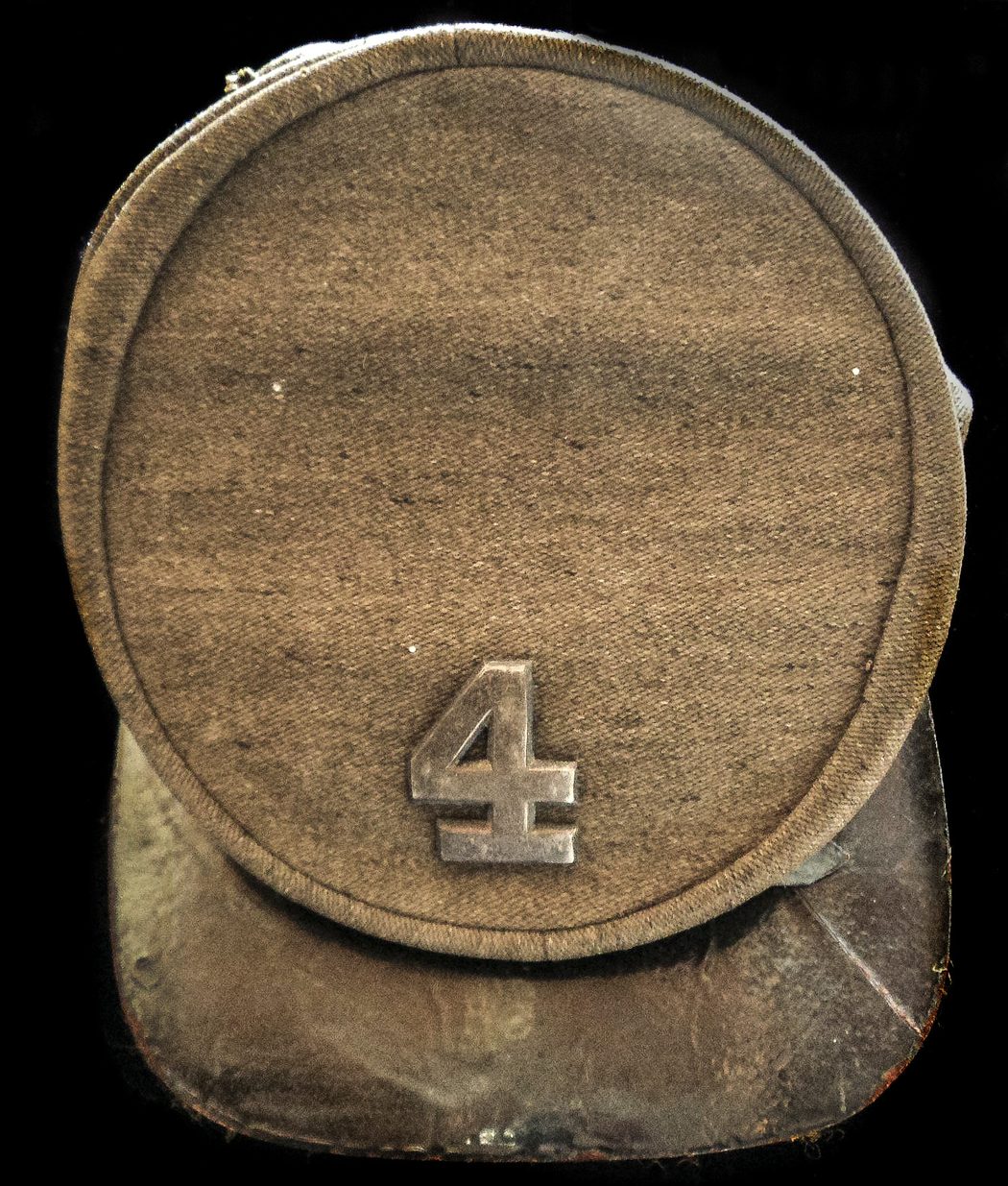
Following this timeline, the men enlisted on April 24th and had already reached Manassas before being turned back, prior to May 5. This did not deter them long; they quickly armed themselves and returned to the front within a month. The June Captain Hale’s homespun cap is adorned with a brass 4, acquired after the “Grayson Dare Devils” became part of Stonewall Jackson’s 4th Virginia Infantry. 5 edition of the Dallas [Texas] Weekly Herald, quoting the New York Day Book, described the “Famous Grayson Dare Devils” thus:
The “Grayson Dare Devils”, a company of mountaniers, all six feet high and terrible marksmen came in on Friday. These hardy and reckless backwoodsmen are picturesquely attired in blue shirts, red caps and black pants. Each man carries his own rifle and bowie knife, both of which he has used since boyhood. They are the same creatures I wrote you about long ago, who, while at rifle practice shoot at when running. They look with undisguised contempt on an individual who is obliged to stand still in order to bore the bull’s eye.
The Dare Devils were armed and ready for service, but notice that in this early June article the men are described as being uniformed in their own unique way. A few days later, during the same month, June 1861, Confederate uniform regulations calling for a “light grey blouse, double